
Rebuilding Strength: Gentle At-Home Rehab After Dog Orthopedic Surgery
Bringing your dog home after orthopedic surgery comes with a new set of responsibilities. There are medications to manage, bathroom trips to supervise, and suddenly, ordinary activities like climbing onto the couch can become a problem.
Your veterinarian may have emphasized keeping your dog quiet while also discussing rehabilitation to help restore strength and mobility. For many owners, those instructions seem difficult to reconcile. How can a dog rebuild muscle while spending so much time resting?
The answer depends on the procedure, the healing process, and what your veterinarian has approved.
Dog orthopedic surgery recovery involves protecting healing tissues while gradually returning to comfortable movement. The exercises that benefit one dog may be inappropriate for another, particularly during the early stages after surgery.
Understanding the purpose of rehabilitation, along with the precautions involved, can make caring for your dog at home considerably easier.
Why Dogs Need Rehabilitation After Orthopedic Surgery
Surgery Addresses the Injury, but Strength Takes Time to Return
Orthopedic surgery may stabilize a damaged joint, repair a fracture, or correct a structural problem affecting movement.
Even when the operation is successful, the dog may have lost muscle strength before surgery because the injured leg was painful. Additional muscle loss can occur during postoperative activity restriction.
Some dogs also develop stiffness, changes in weight-bearing, or reduced coordination as they recover.
Rehabilitation Supports Comfortable Movement
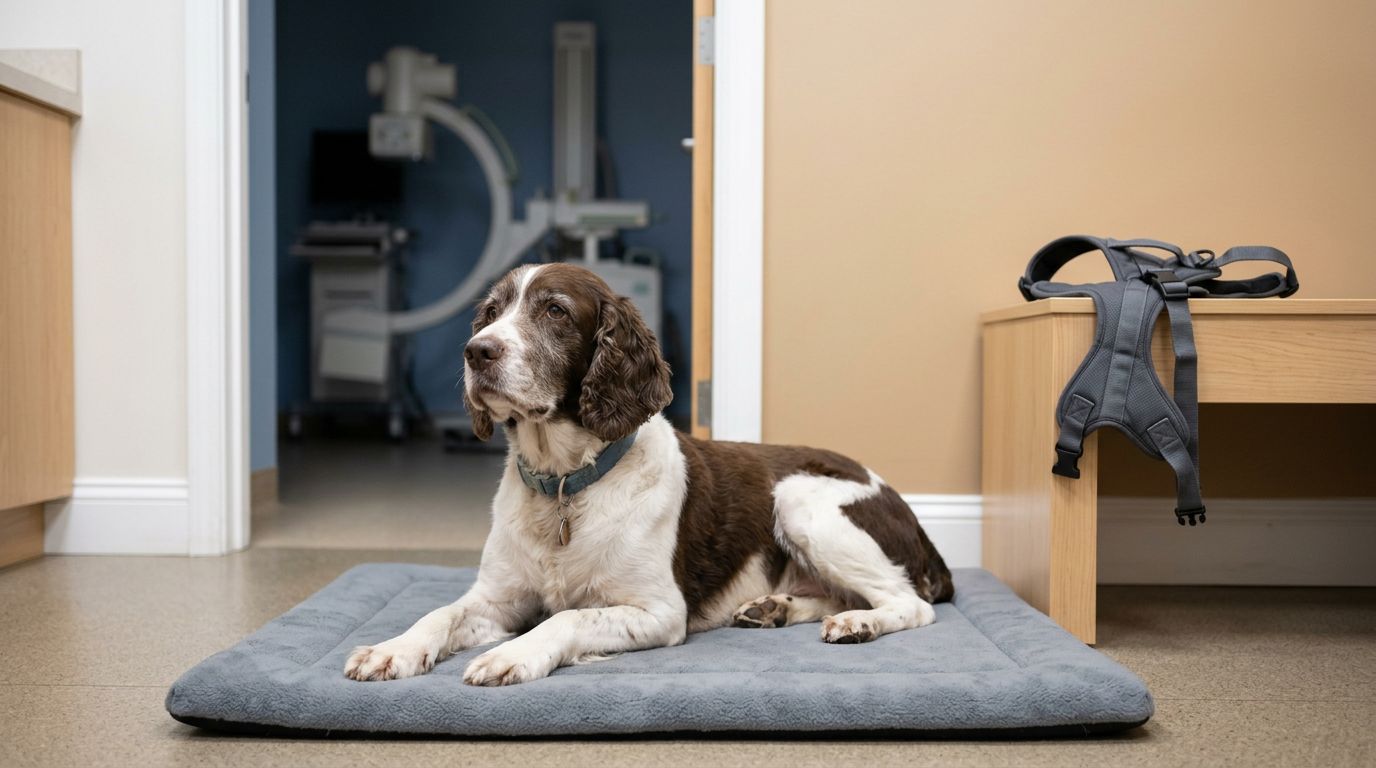
Dog rehabilitation after surgery may help restore joint mobility, improve muscle function, and encourage more normal use of the affected limb.
The American Animal Hospital Association’s rehabilitation guidance describes therapeutic exercises and other treatments used to support mobility and recovery.
However, the benefits depend on selecting activities appropriate for the patient.
Why Every Recovery Plan Is Different
A dog recovering from TPLO surgery has healing bone and implants that must be protected. Fracture repairs have their own stability requirements, while patellar surgery and other joint procedures involve different anatomical structures.
These differences directly influence which movements are appropriate.
That is why dog orthopedic surgery recovery should be guided by the procedure performed and the veterinarian’s assessment rather than a generic exercise schedule.
Follow Your Dog’s Surgical Restrictions Before Starting Exercises
Understand What Your Veterinarian Has Cleared
Before introducing any activity, review your dog’s discharge instructions.
They should explain permitted movement, exercise restrictions, medications, incision care, and follow-up appointments.
If anything is unclear, contact the surgical team before attempting a new exercise.
Protect Healing Bones, Ligaments, and Implants
After procedures involving bone cutting or fracture stabilization, healing structures need protection from excessive forces.
Running, jumping, twisting, and uncontrolled stair use may place stress on repairs before they are sufficiently healed.
This is especially important when owners begin searching for TPLO recovery exercises. An activity recommended for a dog later in recovery may be inappropriate shortly after surgery.
Feeling Better Doesn’t Mean Being Fully Healed
Dogs often become more energetic as discomfort improves.
Some begin using the operated leg more confidently before bone or soft-tissue healing is complete.
The American College of Veterinary Surgeons emphasizes following postoperative restrictions to protect surgical repairs.
Controlled therapeutic movement may be permitted while running and other activities remain restricted. Your veterinarian determines that distinction.
Set Up a Safe Recovery Space at Home
Your dog’s surroundings can have a major influence on recovery, particularly when normal movement needs to be restricted.
Prevent Slipping and Sudden Movements
Tile, hardwood, and other smooth surfaces can be difficult for dogs with limited strength or altered weight-bearing.
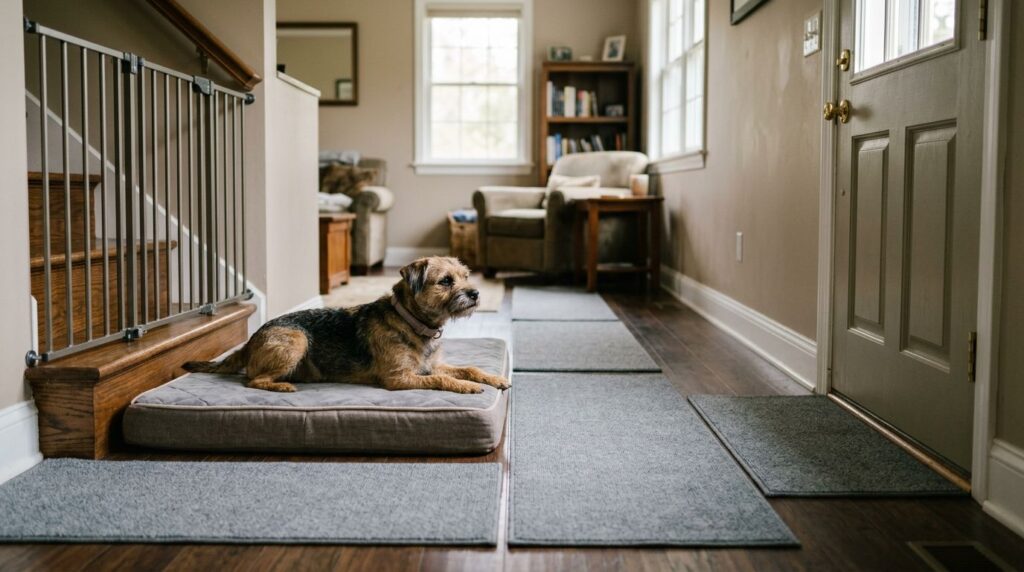
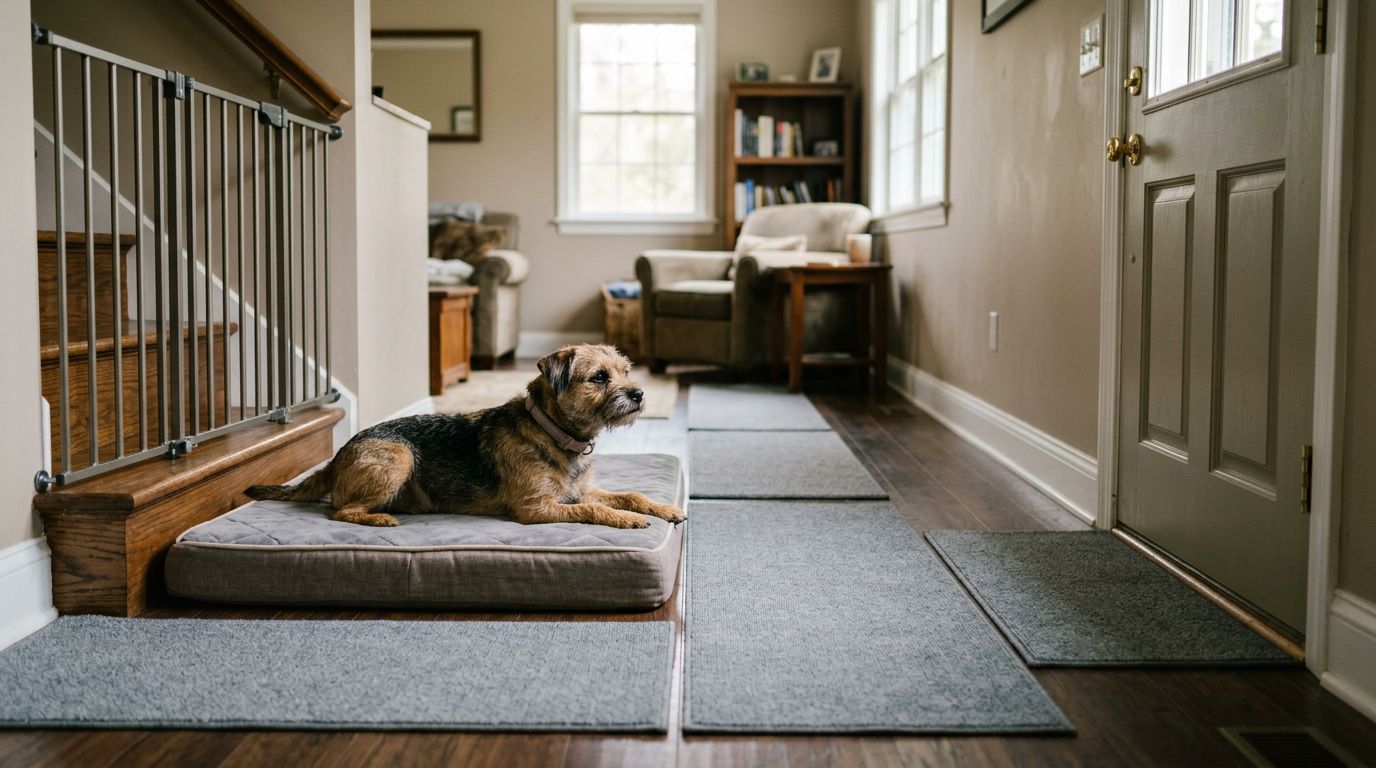
Place nonslip runners or mats along routes your dog must use, especially between the resting area and the door used for bathroom breaks.
Choose mats that stay securely in place rather than sliding underfoot.
Limit Stairs and Furniture Access
Block access to stairs, beds, and couches when jumping or climbing is restricted.
A dog that usually sleeps beside you may need a temporary resting arrangement at floor level.
Baby gates or closed doors can help prevent sudden movements when you’re not directly supervising.
Create a Comfortable Resting Area
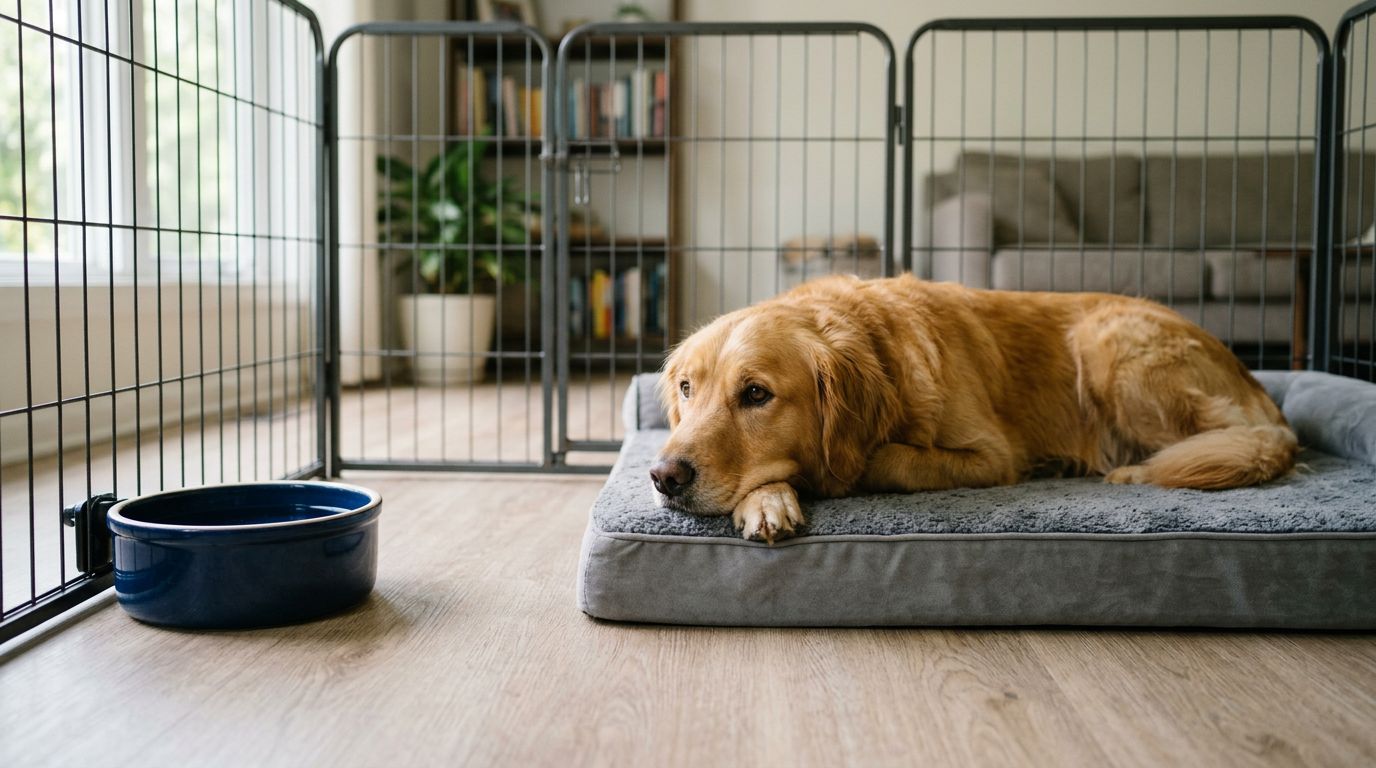
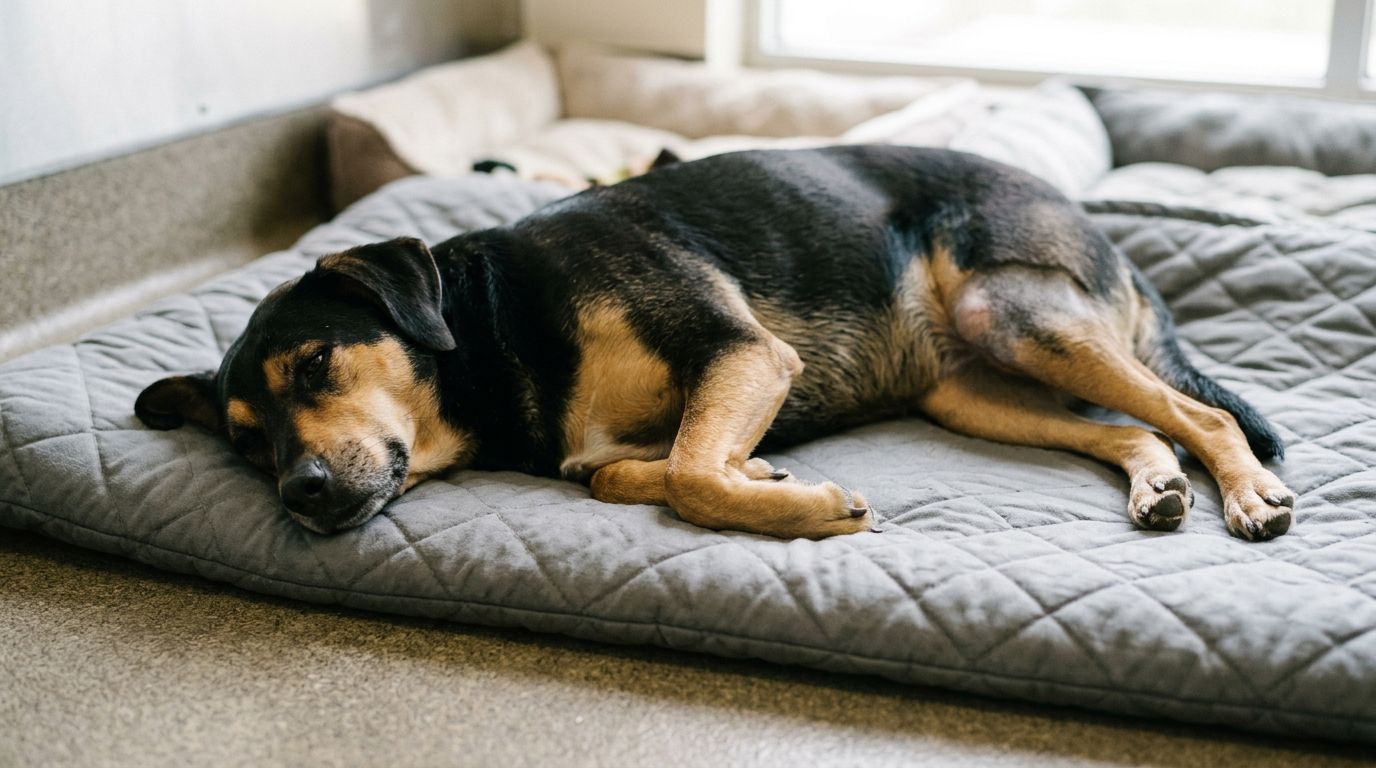
Choose a quiet location with supportive bedding and enough space for your dog to lie comfortably and change position within prescribed restrictions.
Some dogs do well in crates, while others need a small room or exercise pen. Your veterinarian can recommend an appropriate arrangement based on the procedure and your dog’s size and behavior.
Keep food and water accessible.
Make Bathroom Breaks Easier
Use a leash for permitted outdoor trips, following your veterinarian’s instructions.
Some dogs benefit from a support harness or sling, particularly when standing or navigating a step is difficult. Ask the veterinary team to demonstrate proper use before trying one.
During Mesa’s warmer weather, choose safe outdoor conditions and avoid prolonged exposure to hot pavement.
Gentle At-Home Rehabilitation Activities Your Veterinarian May Recommend
At-home dog rehabilitation exercises can be helpful when they are introduced at the correct stage of recovery.
The activities below are examples of what a veterinarian or rehabilitation professional may include in a treatment plan. None should be started without clearance, and the appropriate duration or repetitions will vary.
Short, Controlled Leash Walks
Carefully managed walking may help encourage weight-bearing and restore comfortable movement.
However, the walking surface, pace, distance, and frequency all matter.
A veterinarian may initially permit only brief bathroom trips, with additional walking introduced after reassessment.
Passive Range-of-Motion Exercises
Passive range-of-motion therapy involves a person gently moving a dog’s joint through an appropriate range without requiring the dog to actively perform the movement.
It may help maintain joint mobility in selected patients.
The technique must be demonstrated by a qualified veterinary professional. Incorrect movement can cause pain or place healing tissues under unnecessary stress.
Supported Standing and Weight Shifting
Some rehabilitation programs use carefully supervised standing activities to encourage appropriate limb use and balance.
These activities require adequate surgical stability.
They should not involve pushing an unstable dog beyond its comfort level or using balance equipment without professional instruction.
Sit-to-Stand Exercises
Repeated transitions between sitting and standing may help strengthen muscles during later rehabilitation.
They can also place substantial demands on healing joints.
A veterinarian should determine when this activity is appropriate and how it should be performed.
Cold Therapy and Other Comfort Measures
Cold therapy may be recommended after certain orthopedic procedures to help manage postoperative swelling and discomfort.
Follow the surgical team’s instructions regarding application, skin protection, and timing. Never place ice directly against the skin.
Research on postoperative cruciate ligament rehabilitation supports appropriately selected therapeutic exercise and cold compression, although evidence for other techniques varies.
Physical therapy for dogs after surgery should always fit the underlying injury, procedure, and current stage of healing.
What Should Recovery Progress Look Like?
Recovery usually involves changes in the amount and type of movement permitted as healing progresses.
For dog rehabilitation after surgery, those changes should be based on veterinary reassessment rather than the calendar alone.
| Recovery Stage | Main Priority | What Owners Should Remember |
|---|---|---|
| Early recovery | Protect surgical tissues and manage discomfort | Follow restrictions and avoid unapproved activities |
| Controlled mobility | Restore permitted movement | Watch for pain, fatigue, or worsening limping |
| Later rehabilitation | Rebuild strength and coordination | Increase difficulty only after veterinary clearance |
| Return to activity | Gradually resume normal function | Follow procedure-specific follow-up instructions |
Early Recovery
Initial priorities generally include incision protection, prescribed medications, restricted activity, and comfortable rest.
Some dogs may be permitted limited controlled movement, depending on the procedure.
Gradual Return to Movement
As healing progresses, the veterinarian may recommend additional walking or carefully selected therapeutic exercises.
Improvement may be gradual, and dogs do not necessarily progress at the same rate.
Later Strengthening
More demanding exercises may become appropriate once sufficient healing has occurred.
For procedures involving bone repair, imaging may be recommended before activity increases.
Dog orthopedic surgery recovery is best evaluated through comfort, mobility, surgical healing, and veterinary examination findings together.
How to Tell if Your Dog Is Doing Too Much
Watch for Changes in Lameness
A worsening limp, renewed reluctance to use the operated leg, or difficulty completing previously comfortable movements can indicate a problem.
Some temporary fatigue may occur with increased activity, but persistent deterioration should not be dismissed.
Recognize Pain and Swelling
New swelling, trembling, unusual sensitivity, increased panting, or changes in behavior may indicate discomfort.
Dogs do not always vocalize when something hurts. Adobe’s article on signs your pet may be in pain explains other changes owners may notice.
Know When to Stop
If an exercise causes pain or increased lameness, stop and contact the veterinary team for guidance.
Severe pain, sudden inability to bear weight, significant incision discharge or opening, collapse, or marked illness require prompt veterinary attention.
Never increase or change prescribed pain medication without veterinary direction.
Managing Your Dog’s Energy During Restricted Activity
One of the harder parts of recovery can be managing a dog that feels energetic but remains under strict activity restrictions.
Why Restlessness Happens
As postoperative pain improves, your dog may want to resume familiar routines long before the surgical site is ready.
Restlessness can also develop when walks, playtime, and social interaction are suddenly limited.
Choose Calm Mental Enrichment
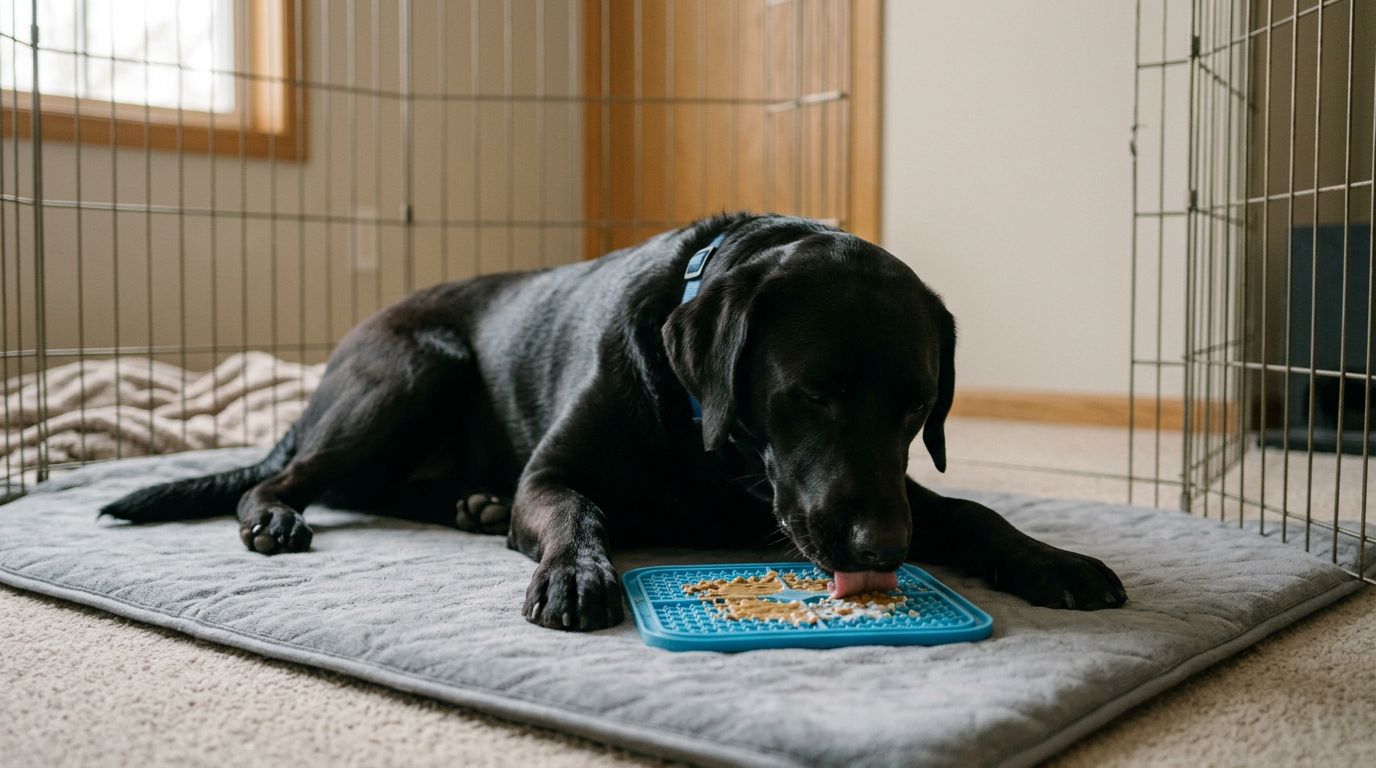
When permitted, quiet activities such as suitable food puzzles or calm scent-based enrichment may help occupy your dog without demanding substantial movement.
Avoid activities that encourage lunging, jumping, or quick turns.
Prevent Unexpected Movement
Supervise interactions with children and other pets. Separate energetic animals when necessary to prevent rough play.
If your dog has difficulty remaining calm during recovery, ask your veterinarian about appropriate management options rather than administering sedating medications independently.
Why Follow-Up Visits Matter Before Increasing Activity
Checking Healing and Function
Postoperative examinations allow the veterinarian to assess incision healing, discomfort, limb use, and overall progress.
They also provide an opportunity to discuss any problems you’ve noticed at home.
When Imaging May Be Recommended
For some procedures, particularly those involving bone healing, diagnostic X-rays may be used to assess progress before increasing activity.
Not every surgical patient requires the same imaging schedule.
Adjusting the Rehabilitation Plan
Your dog’s veterinarian may change permitted activities based on examination findings.
Bring notes about limping, energy levels, medication concerns, and any movements your dog struggles with.
Short videos of your dog walking may also help illustrate changes that are difficult to reproduce during an appointment.
Wait for clearance before making major increases in activity.
Orthopedic Surgery and Recovery Guidance at Adobe Veterinary Clinic in Mesa
Adobe Veterinary Clinic provides orthopedic examinations and surgery for dogs in Mesa, including TPLO procedures for cruciate ligament injuries.
Our orthopedic repair services include postoperative pain management and guidance for caring for your dog during recovery.
For owners navigating dog orthopedic surgery recovery, veterinary follow-up can help clarify whether healing is progressing appropriately and when additional movement may be permitted.
Adobe also offers diagnostic imaging when indicated.
If you’re uncertain about your dog’s activity restrictions or concerned about postoperative changes, contact the clinic for individualized guidance.
Professional rehabilitation services may be recommended for selected dogs, depending on their condition and recovery needs.
Your At-Home Orthopedic Recovery Checklist
Keep these priorities in mind throughout recovery:
- Review your dog’s discharge instructions.
- Give medications exactly as prescribed.
- Maintain a secure, nonslip resting environment.
- Prevent jumping and unauthorized stair use.
- Supervise permitted bathroom trips.
- Perform only veterinarian-approved at-home dog rehabilitation exercises.
- Monitor incision healing and limb use.
- Record changes in pain, swelling, or mobility.
- Attend scheduled postoperative rechecks.
- Ask your veterinarian before increasing activity.
A written recovery plan can help everyone in the household follow the same restrictions.
Frequently Asked Questions About Dog Orthopedic Surgery Rehabilitation
When can I start rehabilitation exercises after my dog’s orthopedic surgery?
The appropriate starting point depends on the surgical procedure, stability of the repair, and your dog’s condition. Some patients begin controlled movement relatively early, while others need stricter protection. Ask the surgical team which activities are permitted, when they should begin, and what symptoms mean an exercise should stop.
Are short walks safe after TPLO surgery?
Controlled leash walking may be included in a TPLO recovery plan, but the timing and amount must follow the surgeon’s instructions. TPLO recovery exercises should account for bone healing and implant stability. A dog appearing comfortable does not mean running, longer walks, or unrestricted activity are safe.
Can I perform passive range-of-motion exercises on my dog at home?
Only if your veterinarian or rehabilitation professional has specifically approved and demonstrated them. Passive movement may be useful for selected patients, but some surgical repairs require particular restrictions. Incorrect positioning or excessive movement can cause discomfort or interfere with healing.
How do I know if my dog is overdoing rehabilitation?
Watch for increased limping, swelling, reluctance to bear weight, worsening discomfort, or unusual fatigue. Stop an activity that causes pain and contact the veterinary team. Sudden severe symptoms, inability to use the limb, or significant incision problems require prompt attention.
Does my dog need professional rehabilitation after orthopedic surgery?
Not every dog requires specialized rehabilitation services. However, professional assessment may benefit dogs with significant muscle loss, persistent mobility problems, complicated injuries, or difficulty progressing through recovery. Physical therapy for dogs after surgery should be individualized and coordinated with the treating veterinarian.
Get Guidance for Your Dog’s Orthopedic Recovery in Mesa
If your dog is recovering from orthopedic surgery and you’re concerned about mobility, pain, or permitted activity, Adobe Veterinary Clinic can help assess the situation and discuss appropriate next steps.
Adobe Veterinary Clinic
6454 E. Main Street
Mesa, AZ 85205
Phone:
(480) 832-2240
Contact Adobe Veterinary Clinic to discuss your dog’s postoperative care.
Request a Veterinary Examination