
What to Look for in a Mesa Pet Boarding Facility (Beyond Just the Price)
Comparing boarding facilities in Mesa can get confusing once you start looking beyond the nightly rates. One facility includes individual walks in its standard price, another offers group play for an additional charge, and a third provides boarding within a veterinary clinic.
Those differences matter, particularly when your dog needs a quiet environment or your cat becomes stressed around unfamiliar animals.
When choosing a pet boarding facility, you’ll want to understand what happens during an ordinary day, who handles unexpected problems, and whether the environment suits your animal’s temperament and health.
There are plenty of options for pet boarding in Mesa, but a lower advertised rate doesn’t necessarily mean a lower total bill. Likewise, expensive accommodations don’t guarantee more attentive care.
The following considerations can help you compare facilities before making a reservation.
Look Beyond the Nightly Boarding Rate
Understand What the Base Price Includes
A nightly boarding rate may cover an enclosure, regular meals, bathroom breaks, and basic observation. At another facility, some of those services may be structured differently.
Before comparing prices, ask what a normal boarding day includes. How often does your dog go outside? Are meals provided according to your instructions? Is individual attention included, or does it cost extra?
For cats, ask about litter box maintenance, feeding schedules, and whether anyone spends time observing their behavior.
Ask About Additional Charges
Depending on the facility, additional fees may apply for medication administration, special feeding arrangements, extra walks, grooming, late pickups, or holiday stays.
None of these charges is automatically unreasonable. What matters is knowing about them before booking.
Compare the Total Cost of the Stay
Request an estimate for your actual travel dates and your pet’s individual requirements.
A boarding option with a higher base rate may include services you would otherwise purchase separately. Another provider may be more economical because your pet doesn’t need additional activities.
Compare what your animal will receive, then compare the final cost.
Check Cleanliness, Ventilation, and Facility Safety
What to Look for During a Tour
An organized, well-maintained facility should be able to explain how enclosures are cleaned, how waste is removed, and how feeding areas are maintained.
Pay attention to ventilation, secure doors, fencing, and the condition of the sleeping areas.
A kennel can look attractive in photographs while having operational problems that aren’t obvious online. If tours are available, they provide an opportunity to see how the facility functions.
How the Facility Handles Illness
Animals sharing a boarding environment can be exposed to contagious illnesses, including respiratory infections.
The American Animal Hospital Association’s guidance on canine respiratory infections explains why respiratory disease can involve several infectious organisms.
Ask how staff identify coughing or otherwise ill animals, whether affected pets are separated, and how cleaning is handled between stays.
Climate Control in Mesa
In Mesa, comfortable indoor temperatures deserve attention, especially during warmer months.
Ask whether sleeping accommodations are climate-controlled and how outdoor activity is managed during hot weather. Indoor comfort and outdoor exercise arrangements should both be appropriate for your pet.
Ask Who Is Caring for Your Pet and When
A boarding facility’s staffing arrangements can tell you more about daily care than the size of its kennels.
Staff Experience and Daily Supervision
Ask who feeds the animals, handles medications, supervises activity, and checks for changes in behavior.
Staff should be able to explain how they respond when a dog stops eating, a cat hides continuously, or an animal appears uncomfortable.
The ability to recognize a problem matters just as much as completing the normal feeding and cleaning routine.
What Happens Overnight?
This is one of the most important details when choosing a pet boarding facility.
Some facilities have overnight employees. Others conduct evening checks before staff leave and resume care the following morning.
A facility advertising 24-hour supervision may mean that caretakers are present continuously. It does not necessarily mean a veterinarian is on-site overnight.
Ask exactly who is present and when.
Emergency Procedures
Find out how the facility obtains veterinary care after hours, how transportation is handled, and when an owner or emergency contact will be notified.
The answers should be clear before your pet arrives.
Compare Exercise, Socialization, and Daily Routine
Group Play Versus Individual Activity
When researching what to look for in dog boarding, the exercise schedule deserves more attention than a photograph of a large play yard.
Some dogs enjoy interacting with compatible animals. Others become overwhelmed in groups or have health conditions that make rough play inappropriate.
Ask how dogs are evaluated before participating in group activities, how interactions are supervised, and whether individual exercise is available.
A quieter boarding arrangement can be entirely appropriate for an older or less social dog.
Bathroom Breaks and Outdoor Time
Find out how often dogs leave their sleeping areas and what those outings involve.
A supervised walk, a short bathroom break, and extended outdoor recreation are different experiences.
Ask about the frequency of each rather than assuming that advertised exercise means the same thing everywhere.
Rest Matters, Too
Constant stimulation isn’t ideal for every dog.
An appropriate daily routine should include opportunities to rest without continual noise or interaction.
Owners can also ask whether feeding and activity schedules can accommodate a dog’s familiar routine.
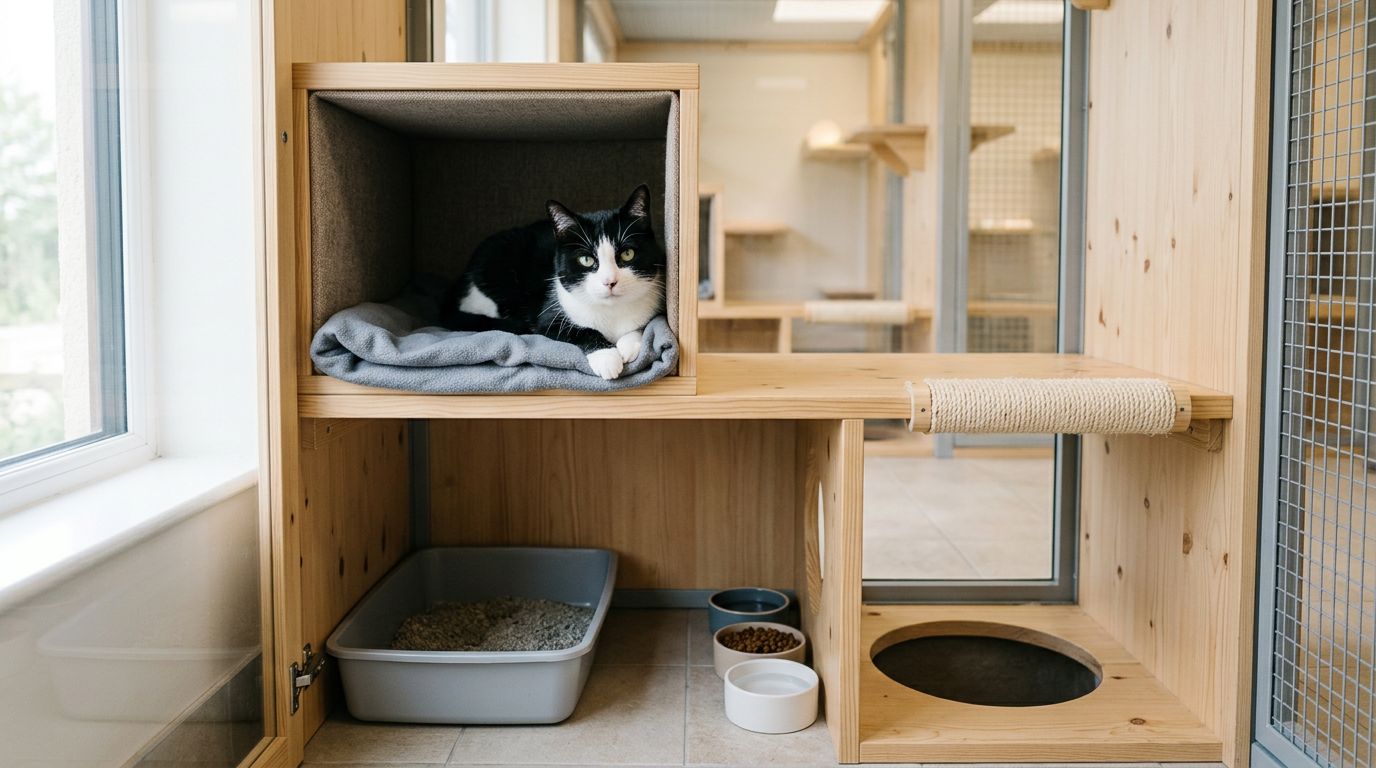
Make Sure the Facility Is Appropriate for Cats
Cat boarding deserves its own evaluation.
A setup designed primarily around active dogs may not provide the quiet environment that some cats need.
Separate Cat and Dog Areas
Cats can be sensitive to unfamiliar barking, movement, and activity.
Separate accommodations may help reduce unnecessary stimulation, particularly for animals that already become anxious outside their normal surroundings.
Hiding, Resting, and Litter Box Access
The 2022 Cat Friendly Veterinary Environment Guidelines discuss the importance of environmental design, including appropriate resting opportunities and access to essential resources.
Ask whether cats have comfortable places to rest, opportunities to hide, and suitable access to litter boxes, food, and water.
A cat shouldn’t have to remain beside its litter box to reach its resting space.
Handling and Environmental Stress
Some cats welcome interaction; others need time to become comfortable.
Ask how staff approach frightened animals and whether feeding, cleaning, and handling routines can accommodate different temperaments.
For particularly stress-sensitive cats, qualified in-home care may also be worth considering.
Understand Vaccination and Illness-Prevention Policies
Which Vaccines Are Required?
Boarding facilities typically establish health requirements for admitted animals, although the specific policies vary.
Adobe Veterinary Clinic’s published boarding information lists rabies, DHPP, and Bordetella requirements for dogs, along with rabies and FVRCP for cats.
These requirements help reduce certain infectious disease risks, but vaccination cannot guarantee that an animal will avoid every illness.
Ask About Parasite Prevention
Find out whether the boarding facility requires current flea and tick prevention or has other parasite-control policies.
Ask what happens if parasites are identified during a stay.
Check Requirements Before Booking
Don’t assume that your pet’s usual vaccination record meets every facility’s rules.
Some providers have specific documentation or timing requirements. Discuss needed vaccines with your veterinarian ahead of travel rather than scheduling everything immediately before drop-off.
Adobe’s preventive veterinary care provides a relevant resource for owners reviewing their pet’s health before boarding.
Consider Medication Administration and Special Care Needs
A pet with a chronic condition may need more than regular meals and scheduled exercise.
Ask whether staff can follow written medication instructions, how doses are recorded, and what happens when an animal refuses medication or food.
This is particularly relevant when considering veterinary boarding vs traditional boarding. A veterinary facility may offer access to medical personnel during staffed hours, while a traditional kennel may need to contact an outside veterinarian.
Actual capabilities differ from one provider to another.
Know the Facility’s Limits
The ability to administer medication doesn’t automatically mean a facility offers glucose monitoring, intensive nursing care, or overnight veterinary supervision.
Pets with complicated health concerns may need an examination or treatment review before boarding. Adobe’s internal medicine services are relevant when medical concerns require additional veterinary assessment.
Discuss specific needs before making a reservation.
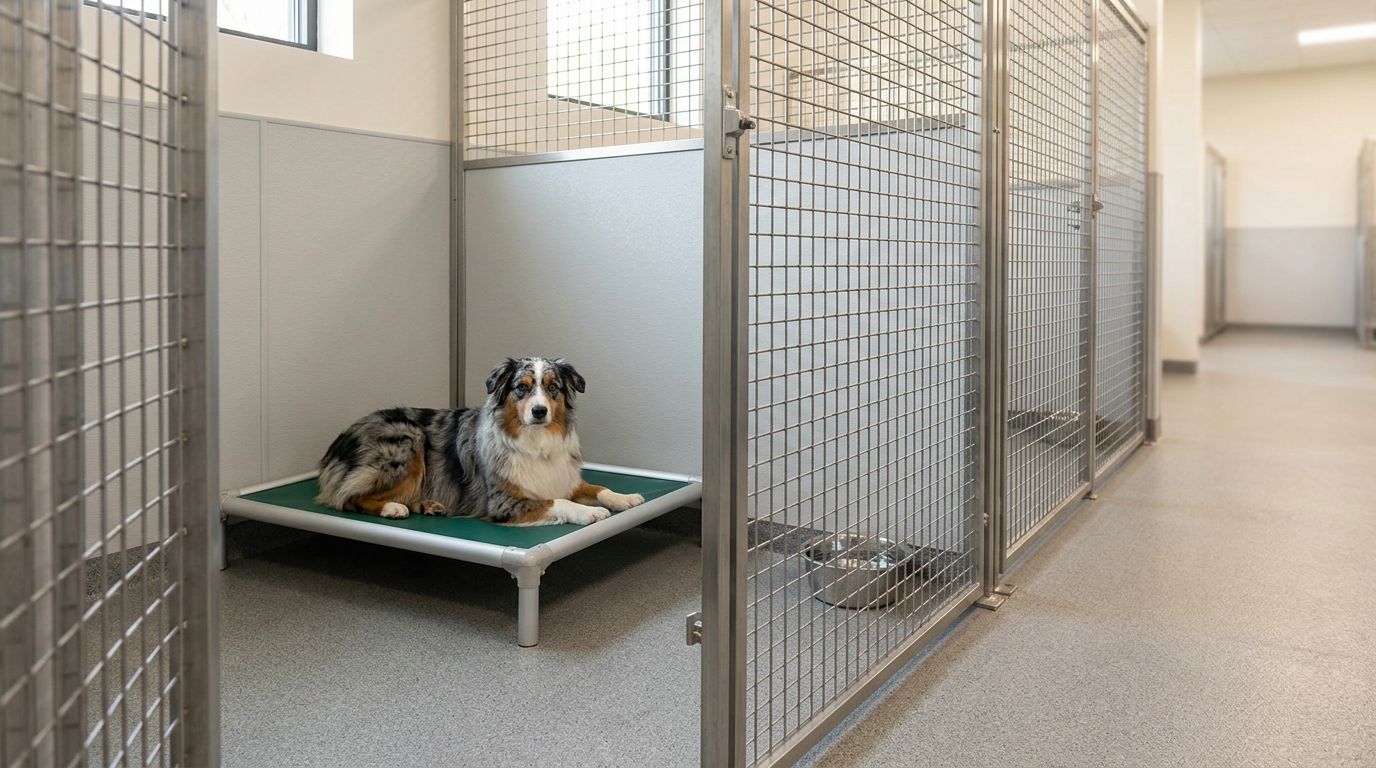
Tour the Facility and Ask About Communication
What a Tour Can Reveal
When available, a tour lets you observe the condition of the accommodations and meet some of the people responsible for daily care.
It’s also an opportunity to learn whether staff can answer practical questions clearly.
A facility may have reasonable limitations on access to animal-care areas for safety or infection-control reasons. Ask whether alternative ways to view accommodations are available.
How Will You Receive Updates?
Among the useful questions to ask a boarding facility is how staff communicate when something changes.
Will they contact you if your pet misses meals, becomes unusually withdrawn, or develops an illness? Who decides when veterinary attention is necessary?
Some facilities offer routine photographs or updates. Others focus on communicating significant concerns.
Understand the policy rather than assuming updates are included.
Review the Boarding Agreement
Check pickup and drop-off times, cancellation terms, medication requirements, emergency authorizations, and potential additional charges.
Adobe provides patient forms that owners can review as part of preparing for veterinary services.
Red Flags to Watch for Before Booking
There are several situations that deserve further questions before leaving your pet.
Be cautious when a boarding provider cannot clearly explain:
- How animals are supervised during the day and overnight.
- What happens during a medical emergency.
- How medications are administered.
- Which vaccinations are required.
- How dogs are assessed for group activity.
- What services the quoted price includes.
Poorly maintained enclosures, unsecured access points, or dismissive responses to legitimate safety concerns are also reasons to investigate further.
Still, choosing a pet boarding facility requires judgment. A provider that declines a medically complex animal because it cannot meet the animal’s needs may be demonstrating appropriate responsibility.
The goal is to find a provider whose actual capabilities match your pet’s requirements.
How Adobe Veterinary Clinic Approaches Pet Boarding in Mesa
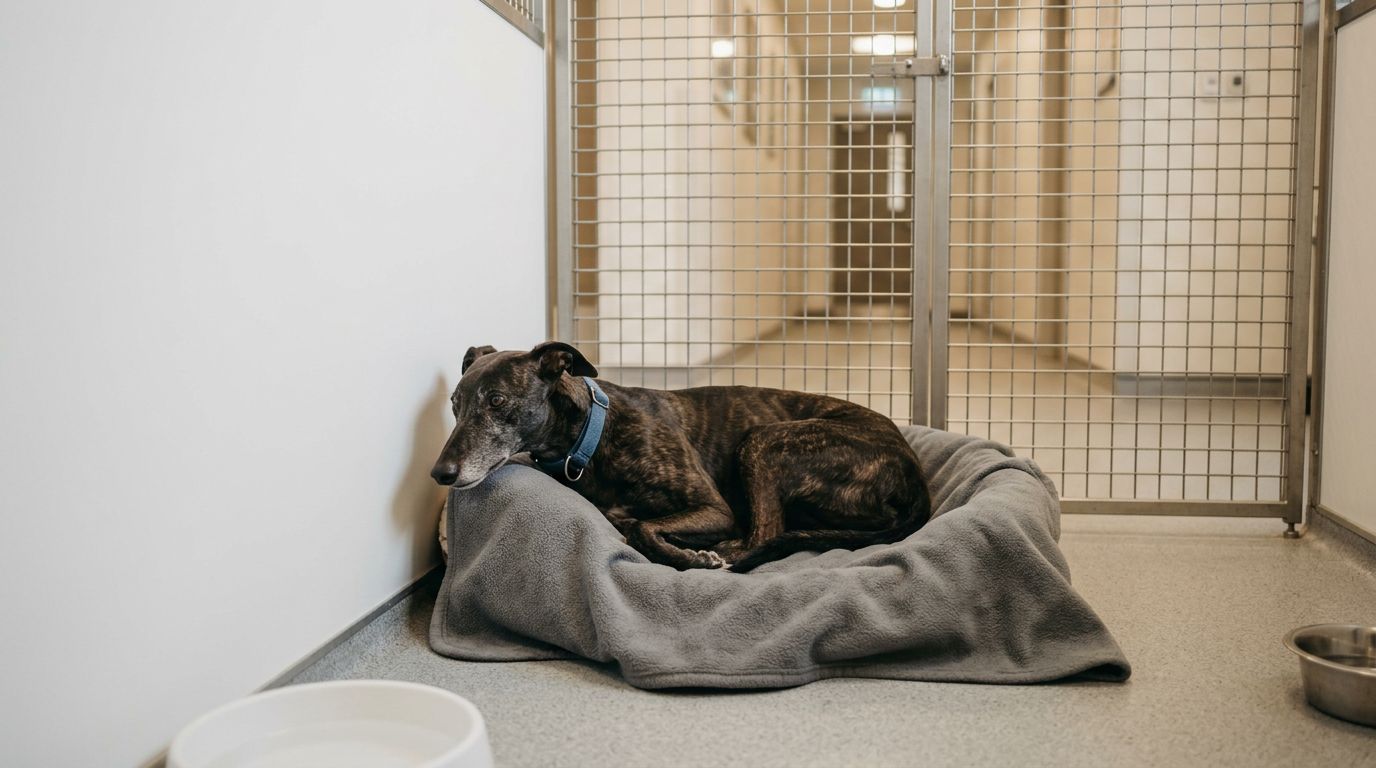
Adobe Veterinary Clinic offers dog and cat boarding at its facility in Mesa, with separate accommodations for each species and climate-controlled indoor areas.
The clinic’s published boarding services describe medication administration, attention to health changes, and care provided within a veterinary practice.
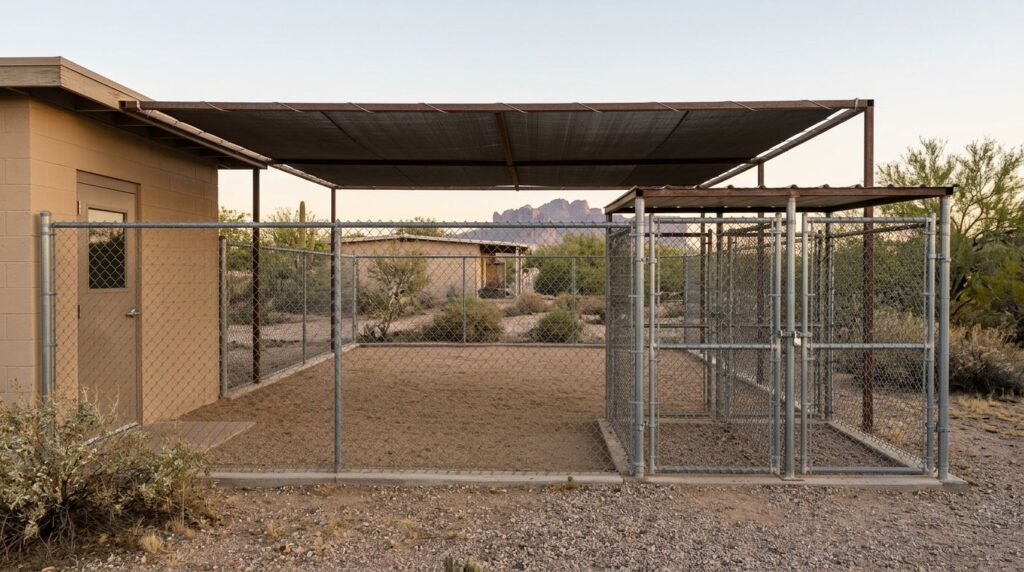
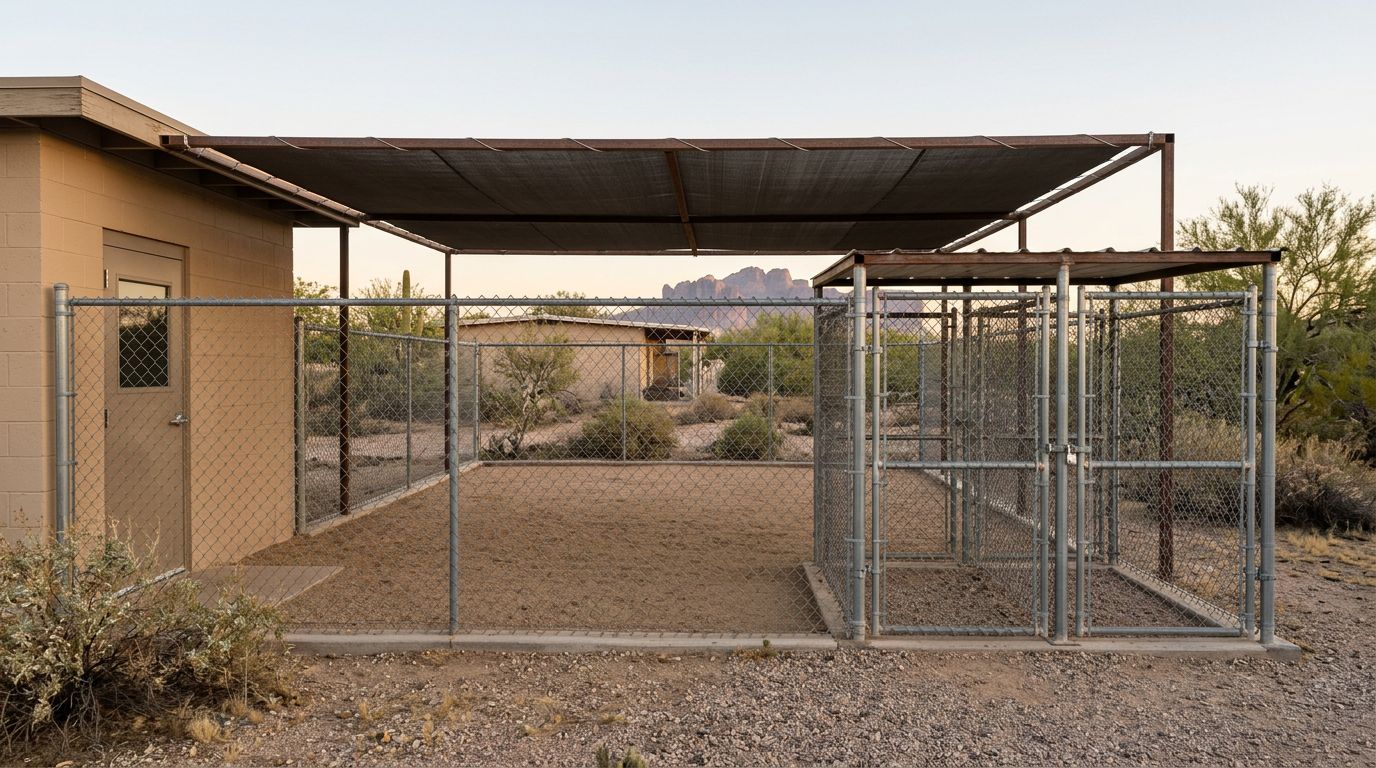
Adobe’s general services overview also describes large dog runs, twice-daily outdoor outings for boarded dogs, and cat boarding accommodations.
For owners comparing pet boarding in Mesa, these details provide a starting point for discussing whether Adobe’s routine and available care meet their animal’s needs.
Contact the clinic to confirm current boarding requirements, supervision arrangements, medication services, and availability before booking.
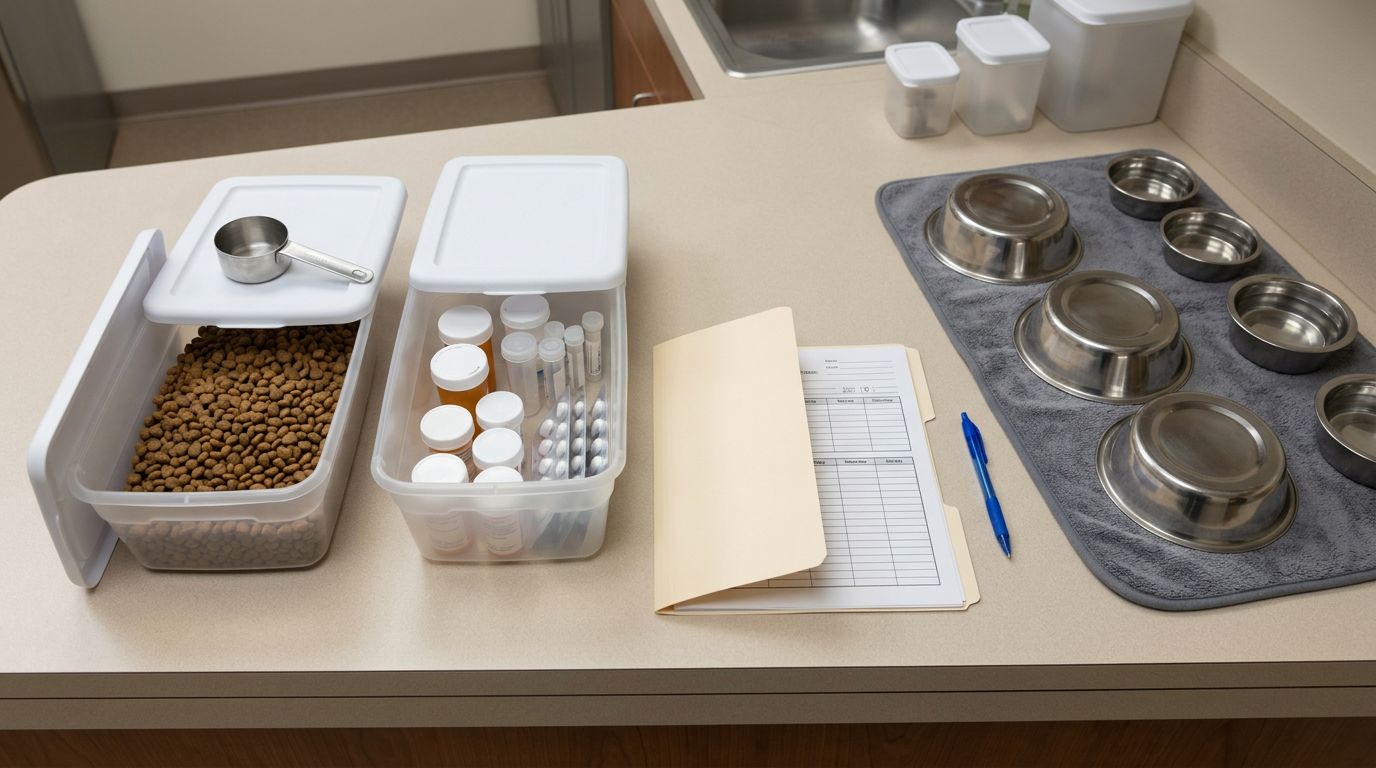
Your Pet Boarding Comparison Checklist
Before making a final decision, use these questions to ask a boarding facility as a practical reference:
- What is included in the nightly price?
- Which services cost extra?
- Who supervises animals during the day?
- Is anyone present overnight?
- What are the vaccination and parasite-prevention requirements?
- How often are enclosures cleaned?
- How are dog exercise and social interactions managed?
- Are cats housed separately from dogs?
- Can staff accommodate prescribed medications?
- What happens during a medical emergency?
- How will the facility contact you about concerns?
- Can you review the boarding agreement and accommodations before committing?
If you’re still uncertain what to look for in dog boarding, focus first on whether the facility’s daily routine suits your dog’s temperament, health, and activity needs.
An impressive amenity is only valuable when your pet can comfortably use it.
Frequently Asked Questions About Choosing Pet Boarding in Mesa
What should I ask before choosing a pet boarding facility in Mesa?
Start with staffing, supervision, daily routines, and emergency procedures. Ask whether the quoted price includes feeding, exercise, and routine attention, and confirm any additional charges. When choosing a pet boarding facility, it also helps to review vaccination requirements and determine whether the accommodations suit your individual dog or cat.
How can I tell whether a dog boarding facility is clean and safe?
Ask about cleaning procedures, waste removal, ventilation, secure enclosures, and how animals showing signs of illness are handled. A facility tour can provide useful information when available. No boarding provider can guarantee that every animal will remain free of infectious disease or injury during a stay.
Is veterinary boarding better than a traditional kennel for my pet?
The answer depends on your pet’s needs. The comparison of veterinary boarding vs traditional boarding should consider medication requirements, medical access, staffing arrangements, and the animal’s comfort. Some healthy pets do well in traditional kennels, while others may benefit from veterinary resources. Confirm what the individual facility actually provides.
Should cats be boarded separately from dogs?
Separate accommodations are generally preferable because unfamiliar barking and activity can increase stress for some cats. The environment should also provide appropriate resting areas, litter box access, and careful handling. Ask about the actual setup rather than assuming every boarding facility has the same feline accommodations.
What extra boarding fees should I ask about before booking?
Ask whether the facility charges separately for medication administration, extra exercise, individual attention, grooming, holiday stays, or late pickup. Request an estimate covering your full stay, including any services your pet will require. Pricing policies vary, so written confirmation can help prevent unexpected charges.
Learn More About Boarding at Adobe Veterinary Clinic
If you’re comparing Mesa boarding facilities, Adobe Veterinary Clinic can answer questions about its accommodations, health requirements, medication administration, and current availability.
Adobe Veterinary Clinic
6454 E. Main Street
Mesa, AZ 85205
Phone: (480) 832-2240
Explore our veterinary boarding services or contact Adobe Veterinary Clinic to discuss your pet’s needs before arranging a stay.
Ask About Pet Boarding