
Scheduling a medical procedure for your furry family member is a big decision. When our veterinarians recommend a thorough oral examination and regular pet dental cleanings, we often see a wave of worry wash over pet parents. The primary source of this anxiety almost always stems from the word "anesthesia."
It is completely natural to feel protective of your companion. Handing over their leash at the clinic doors requires immense trust. Here at Adobe Veterinary Clinic, we value that trust above all else. We want to be entirely transparent about our medical practices and why we do things a certain way.
You might be wondering why your dog or cat cannot simply stay awake for a quick tooth brushing. This comprehensive guide breaks down exactly why general anesthesia is non-negotiable for proper oral care. More importantly, we will explain why being asleep is actually the safest and kindest option for your best friend.
The Myth of Anesthesia-Free Dentistry
In recent years, awake dental cleanings have become a popular trend in the pet care industry. On the surface, skipping sedation sounds like a wonderful, low-risk alternative. However, these cosmetic procedures do a massive disservice to your companion's actual health and are no replacement for proper pet dental cleanings.
When an animal is awake, a technician can only scrape plaque off the visible portion of the tooth. This makes the teeth look white and clean to the naked eye. Sadly, a white smile does not equate to a healthy mouth.
The real danger lies hidden out of sight. The most destructive bacteria thrive deep below the gum line in the periodontal pockets. Scraping the surface of the tooth does nothing to stop bone loss, treat infected roots, or prevent systemic organ damage. The Veterinary Oral Health Council strongly advises against awake cleanings because they provide a false sense of security while hidden diseases progress rapidly.
Comprehensive Diagnostics Require Complete Stillness
Imagine going to your own human dentist. You understand the process. You willingly open your mouth wide, hold perfectly still, and allow the doctor to take x-rays.
Animals do not understand this concept. Even the most incredibly well-behaved dog will not naturally hold their mouth open while a sharp metal probe examines their gum line. Felines are even less cooperative when strange tools approach their faces.
Proper veterinary dentistry requires total patient stillness. We need to capture high-definition digital x-rays of every single tooth root in the jaw. Without deep sedation, achieving this level of diagnostic clarity is physically impossible.
Protecting the Vulnerable Airway
Safety is the driving force behind every medical protocol at Adobe Veterinary Clinic, especially when performing a pet dental cleaning in Mesa AZ. One of the most critical reasons we use anesthesia is to protect your pet's delicate respiratory system.
During a professional scaling procedure, we use an ultrasonic tool that vibrates rapidly to shatter hardened calculus. This tool sprays a continuous stream of water to keep the tooth completely cool. Without airway protection, that water would mix with chunks of bacteria-laden plaque and pool in the back of the throat.
When your pet is asleep, we carefully place a secure endotracheal tube down their airway. This soft tube allows us to deliver pure oxygen and anesthetic gas safely. More importantly, it completely blocks any water, blood, or infected debris from being accidentally inhaled into their lungs.
Eliminating Profound Fear and Pain
Veterinary visits can be stressful for animals on a normal day. Adding painful stimuli into the mix is something we actively try to avoid. Deep cleaning beneath inflamed gums hurts. Probing deep periodontal pockets causes sharp bursts of pain.
If an animal is awake while someone scrapes their sore gums, they will experience immense fear. They might panic, thrash around, and accidentally injure themselves on sharp dental instruments.
Sedation removes all fear, anxiety, and physical pain from the equation. Your companion simply goes to sleep in a warm bed and wakes up later with a clean, pain-free mouth. It is the most humane and compassionate way to treat dental disease.
What Happens During a Proper Dental Procedure
A professional oral treatment involves multiple intricate steps. We approach every single dental cleaning with surgical precision and immense attention to detail.
The American Veterinary Medical Association sets rigorous standards for companion animal dentistry. We follow these guidelines strictly to ensure your pet receives world-class care.
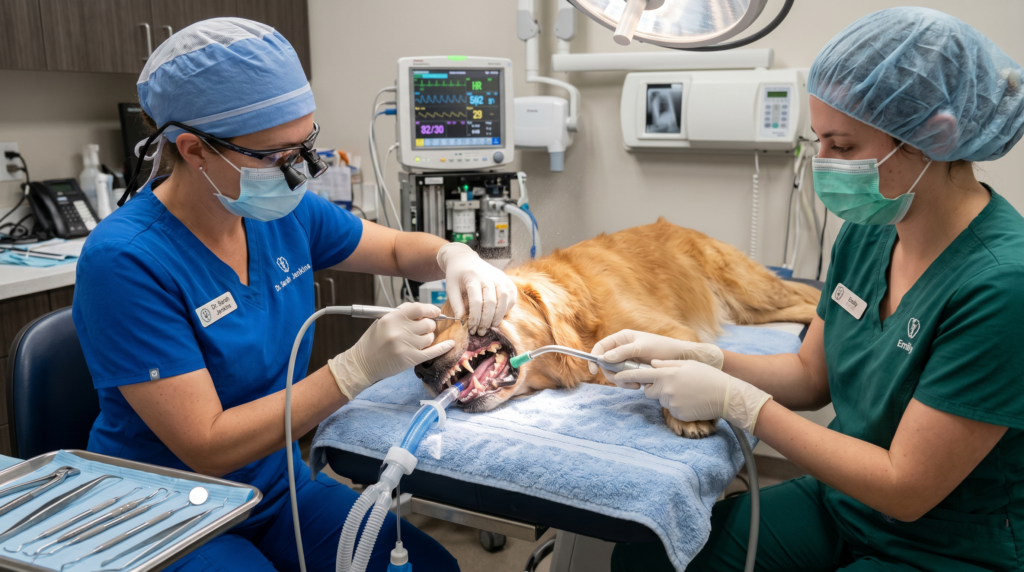
While your companion is resting peacefully, our team performs the following essential steps:
- Complete charting of the mouth to document missing or broken teeth
- Full mouth radiographs to evaluate bone density and hidden root abscesses
- Ultrasonic scaling above and below the gum margin to remove calcified tartar
- Careful probing of individual teeth to measure the depth of gum recession
- Polishing the enamel to smooth out microscopic scratches that attract new plaque
Rigorous Safety Protocols at Adobe Veterinary Clinic
We understand that putting your pet under sedation feels frightening. Please know that modern veterinary medicine utilizes the exact same sophisticated monitoring equipment found in human hospitals.
Before we ever administer a sedative, we run a comprehensive blood panel. This confirms that their liver and kidneys are fully capable of processing the medications. We also customize our drug protocols to fit your pet's exact age, breed, and weight.
Throughout the entire procedure, a dedicated veterinary technician monitors their heart rate, and oxygen levels. We use specialized warming blankets to maintain their core body temperature. Your pet is never left alone for a single second.
Partnering with Your Dedicated Veterinary Team
Taking proactive steps to protect your companion's oral health is one of the greatest gifts you can give them. Untreated dental infections cause chronic, daily pain and shorten lifespans.
You do not have to let the fear of sedation stop you from providing essential medical care. Our compassionate team at Adobe Veterinary Clinic is here to support you through every phase of the process. We are always happy to give you a tour of our surgical suite or answer specific questions about our monitoring protocols.
Please reach out to our clinic today if you suspect your furry friend is dealing with oral discomfort. We are ready to help them achieve a healthy, vibrant smile safely with the best pet dental cleaning in Mesa AZ.
Frequently Asked Questions
Is my older companion safe to go under general anesthesia?
Age is not a disease, but it does require us to be more cautious. We rely heavily on pre-surgical bloodwork and thorough physical exams to determine if an older animal is a good candidate. If their major organs are functioning well, the benefits of removing painful, infected teeth far outweigh the carefully managed risks of sedation.
How long does it take for a pet to fully wake up?
We utilize modern, short-acting medications that allow for a very smooth and rapid wake-up process. Most patients are sitting up and looking around within twenty to thirty minutes after the gas is turned off. However, they may remain slightly groggy or disoriented for the rest of the evening once they go home.
Can I feed my dog or cat the morning of their procedure?
No, fasting is a critical safety requirement for any procedure involving sedation. Anesthetic drugs can occasionally cause nausea. If an animal has a full stomach and vomits while asleep, they could inhale food into their lungs. We typically ask that you remove all food by midnight the night before the appointment.
What happens if you find a severely infected tooth during the cleaning?
If our digital x-rays reveal a painful root abscess or advanced bone loss, extraction is usually the only way to relieve the chronic pain. We will always attempt to call you during the procedure to discuss our findings and get your permission before removing any teeth. We ensure the area is fully numbed with local nerve blocks before proceeding.