

Benefits, Timing, and Risks of Fixing your Cat or Dog
The Crossroads of Pet Ownership: Navigating Reproductive Health Decisions
Bringing a new puppy or kitten into your home is a journey filled with milestones. There are the first vaccinations, the introduction to a nutritious diet, and the beginning of a lifelong bond. However, one of the most significant decisions you will face as a pet owner involves reproductive health. Deciding when to spay or neuter your pet often feels like a heavy responsibility. It is a choice that balances biological timing, behavioral goals, and long-term health outcomes. At Adobe Veterinary Clinic, we understand that this decision is rarely just a box to check on a medical form. It is a foundational component of your pet’s wellness plan.
Table of Contents
- Longevity and Wellness Gains Through Surgical Intervention
- Temperament Evolution: Addressing Behavioral Logistics
- Chronological Milestones: Determining the Optimal Window for Your Pet
- Navigating Clinical Variables: Understanding Anesthesia and Procedural Risks
- Post-Operative Stewardship: Ensuring a Seamless Recovery
- Mesa’s Standard for Animal Surgery: The Adobe Veterinary Clinic Advantage
- Community-Focused FAQs: Pet Care in Mesa, AZ
- Investing in a Lifetime of Health
Many owners feel a natural hesitation when considering elective surgery for their companions. It is normal to worry about anesthesia or the recovery process. However, framing this procedure as a cornerstone of proactive animal wellness can help ease those concerns. Sterilization is not just about preventing unwanted litters, though that is a critical benefit for our community. In Mesa, Arizona, the impact of responsible pet ownership is visible in our local shelters and neighborhoods. By choosing to fix your pet, you are actively participating in a community-wide effort to reduce pet overpopulation and ensure that every animal has a dedicated home.
Beyond the ethical considerations, this decision is about the individual animal sitting at your feet. Every pet has a unique genetic makeup and lifestyle. Our goal is to guide you through the clinical facts so you can make an informed choice. We view spaying and neutering as an investment in your pet’s future. It is a proactive step that sets the stage for a healthier, more predictable life. As your local veterinary partner, we are here to provide the expertise needed to navigate this transition with confidence.
Longevity and Wellness Gains Through Surgical Intervention

The physiological advantages of spaying and neutering are backed by extensive clinical research. One of the most compelling arguments for these procedures is the concept of preventative oncology. By removing reproductive organs, we can significantly lower or even eliminate the risk of several types of cancer. For female pets, spaying before the first heat cycle nearly eliminates the risk of mammary tumors. These tumors are frequently malignant in dogs and almost always malignant in cats. Removing the ovaries and uterus also completely removes the possibility of uterine and ovarian cancers.
In males, neutering eliminates the risk of testicular cancer. It also reduces the incidence of non-cancerous prostate disorders, which can cause significant discomfort and health complications as a dog ages. These preventative measures are a primary reason why sterilized pets statistically live longer lives than those who remain intact. When we remove the potential for these specific diseases, we are clearing the path for a smoother transition into the senior years.
Another critical health benefit is the prevention of pyometra. This is a life-threatening uterine infection that can affect unspayed female dogs and cats. Pyometra often requires emergency surgery and can be fatal if not caught in time. It is a distressing experience for both the pet and the owner, often involving high costs and significant surgical risks. By spaying your pet early, you remove this danger entirely.
The health benefits of sterilization include:
- Elimination of the risk of testicular cancer in males.
- Significant reduction in the risk of mammary gland tumors in females.
- Total prevention of pyometra, a dangerous uterine infection.
- Reduced risk of perineal hernias and perianal tumors in male dogs.
- Lower likelihood of uterine and ovarian cancers.
- Increased average lifespan for both cats and dogs.
Temperament Evolution: Addressing Behavioral Logistics
While the medical benefits are often the primary focus, the behavioral changes associated with spaying and neutering are equally important for a happy household. Hormones play a massive role in how a pet interacts with their environment. Intact pets are driven by deep-seated biological urges that can lead to frustrating and sometimes dangerous behaviors. One of the most common issues is what we call the problem of instinctual migration. This is the urge for a pet to roam or escape the home in search of a mate.

A roaming pet faces numerous hazards, especially in a busy area like Mesa. They are at a much higher risk of being hit by a car, getting lost, or getting into fights with other animals. Neutering and spaying significantly reduce this “wanderlust.” When the hormonal drive to find a mate is removed, pets are generally more content to stay within the safety of their yard and home. This creates a much more harmonious environment for the family and prevents the stress of a missing pet.
Territorial marking is another behavioral challenge that sterilization can address. Male dogs and cats are prone to “lifting a leg” or spraying urine to mark their territory, often inside the house. This behavior is instinctual and driven by testosterone. Neutering early, before these habits become ingrained, can prevent or drastically reduce marking behaviors. Additionally, hormonal regulation through surgery can reduce certain types of aggression. While surgery is not a “cure-all” for every behavioral issue, it often makes pets more focused on their human companions rather than their reproductive instincts.
Chronological Milestones: Determining the Optimal Window for Your Pet
The question of “when” is one of the most debated topics in modern veterinary medicine. For many years, the standard recommendation was to spay or neuter at six months of age. While this remains a solid guideline for many pets, new research has introduced more nuance into the conversation. One of the primary factors we consider today is the growth plate factor. Growth plates are the areas of new bone growth in young animals. Sex hormones play a role in signaling these plates to close.
In large and giant breed dogs, such as Great Danes, Labradors, or Golden Retrievers, removing these hormones too early may delay the closure of growth plates. This can potentially lead to orthopedic issues later in life, such as hip dysplasia or cranial cruciate ligament tears. For these larger breeds, we often discuss delaying the procedure until the dog has reached skeletal maturity, which can be anywhere from 12 to 18 months of age.
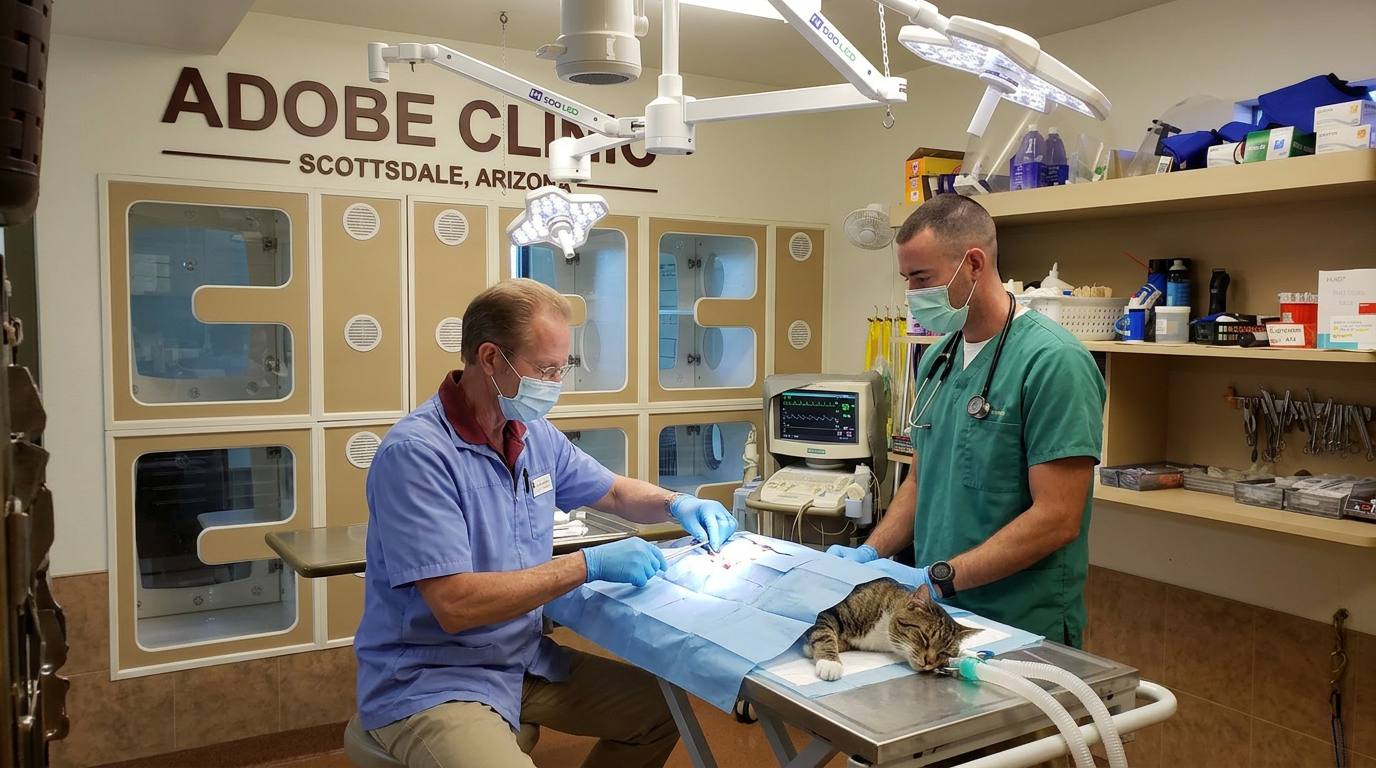
On the other hand, for cats and smaller dog breeds, early intervention is often the best strategy. Cats can reach reproductive maturity as early as four months of age. To prevent the first heat cycle and the accompanying behavioral changes, we typically recommend spaying or neutering cats by five or six months. Small breed dogs also tend to mature faster and generally do not face the same orthopedic risks as their larger counterparts.
The timing of the procedure depends on several variables:
- The breed and projected adult size of the dog.
- The species of the pet (cats vs. dogs).
- The current health status and physical development of the animal.
- The owner’s ability to manage an intact pet and prevent accidental breeding.
- Local licensing and community regulations.
Because there is no “one size fits all” answer, a personalized consultation at Adobe Veterinary Clinic is essential. We evaluate your pet’s specific needs to determine the optimal surgical window.
Navigating Clinical Variables: Understanding Anesthesia and Procedural Risks
It is natural for pet owners to feel “safety anxiety” regarding any surgical procedure. The idea of your pet being under general anesthesia can be daunting. However, modern veterinary anesthesia is incredibly sophisticated and safe. At Adobe Veterinary Clinic, we follow rigorous safety protocols that mirror those found in human hospitals. We do not take shortcuts when it comes to the safety and comfort of our patients.
Before any surgery begins, we perform pre-operative bloodwork. This allows us to check organ function and ensure your pet can safely process the anesthetic medications. If we find any underlying issues, we can adjust our plan or postpone the surgery for the safety of the pet. During the procedure, your pet is monitored by a dedicated technician who tracks heart rate, oxygen levels, blood pressure, and temperature. We use advanced monitoring equipment to stay informed of your pet’s status every second they are in the operating room.
We also focus heavily on pain management. Gone are the days when pets were expected to just “tough it out.” We use a multi-modal approach to pain, meaning we use a combination of different medications to target pain at various levels of the nervous system. This results in a smoother recovery and a more comfortable pet. While no surgery is completely without risk, the controlled environment of a professional clinic makes these procedures very safe. The long-term health benefits of being spayed or neutered far outweigh the minimal risks associated with the surgery itself.
Post-Operative Stewardship: Ensuring a Seamless Recovery
Once the surgery is over, the responsibility shifts to the home environment. Your role in the recovery process is vital to ensuring the incision heals correctly and no complications arise. The most important rule following surgery is the concept of restricted activity. For about ten to fourteen days, your pet needs to take it easy. This means no running, jumping, or rough play. For dogs, this usually means “leash walks only” for potty breaks.
You will also need to monitor the incision site daily. We look for signs of redness, swelling, or discharge. It is also crucial to prevent your pet from licking or chewing at the stitches. This is where the “cone” or E-collar comes into play. While pets may not enjoy wearing it, it is the best tool we have to prevent self-inflicted injury to the surgical site.
To help your pet recover smoothly, consider these steps:
- Provide a quiet, confined space away from other pets and children.
- Use the Elizabethan collar (cone) consistently to prevent licking.
- Check the incision site twice daily for any changes.
- Follow the specific medication schedule provided by our team.
- Prevent any vigorous activity that could put tension on the stitches.
- Contact us immediately if you notice lethargy, loss of appetite, or excessive swelling.
Most pets bounce back very quickly, often feeling like their normal selves within 24 to 48 hours. However, keeping them calm for the full recovery period is necessary to ensure the internal tissues heal as well as the external skin.
Mesa’s Standard for Animal Surgery: The Adobe Veterinary Clinic Advantage
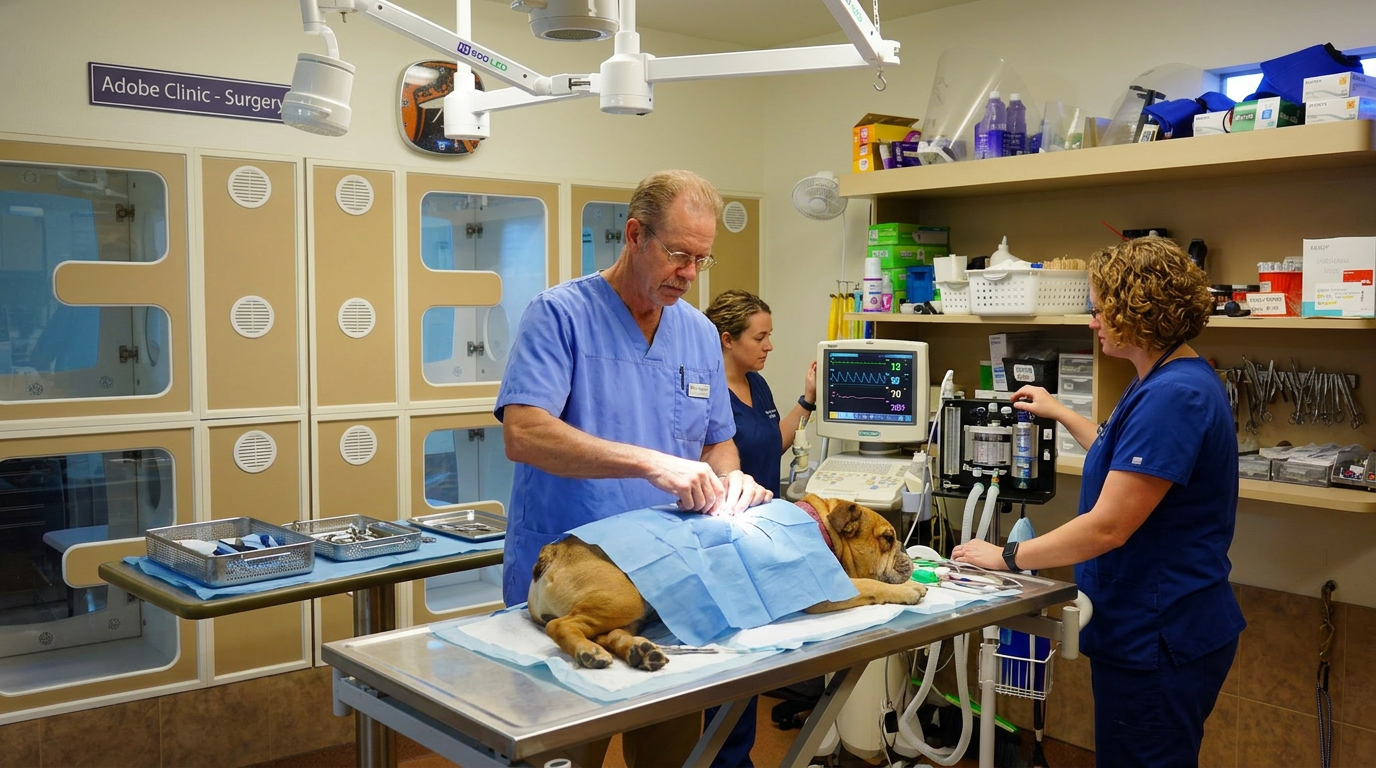
When it comes to your pet’s surgery, where you go matters. There are many options for spay and neuter services, ranging from high-volume clinics to full-service hospitals. At Adobe Veterinary Clinic, we pride ourselves on being a local, full-service facility that offers a higher standard of care. We believe in the continuity of care, meaning the same team that sees your pet for their wellness exams and dental care is the same team performing their surgery.
We offer a comprehensive suite of services that goes beyond just the surgery. Our doctors are experienced in advanced surgical techniques and are supported by a compassionate medical team. We treat every patient as if they were our own. Choosing Adobe means you are choosing a facility that knows your pet’s history and tailors every aspect of the procedure to their specific needs. We focus on individualized attention, ensuring that you are fully informed and comfortable every step of the way.
Mesa residents have trusted us with their pets for years because we combine clinical excellence with a neighborly touch. From our state-of-the-art monitoring equipment to our personalized follow-up calls, we are committed to providing the best possible experience for both you and your pet. We are not just a clinic; we are a partner in your pet’s lifelong health journey.
Community-Focused FAQs: Pet Care in Mesa, AZ
Investing in a Lifetime of Health
The decision to spay or neuter your pet is a significant moment in your journey as an owner. While the timing may vary based on whether you have a Great Dane or a tabby cat, the goal remains the same: a long, healthy, and happy life. By choosing this procedure, you are making a proactive investment in your pet’s future. You are reducing the risk of devastating diseases, preventing behavioral frustrations, and contributing to the well-being of the entire Mesa community.
At Adobe Veterinary Clinic, we are here to support you through every stage of this process. From the initial wellness exam to the final post-operative check-up, our team provides the surgical excellence and compassionate care your pet deserves. We believe that every pet is an individual, and every surgical plan should reflect that. When you are ready to take this important step, know that you have a dedicated partner on Main Street ready to help your pet thrive. Together, we can ensure your companion enjoys many healthy years by your side.