
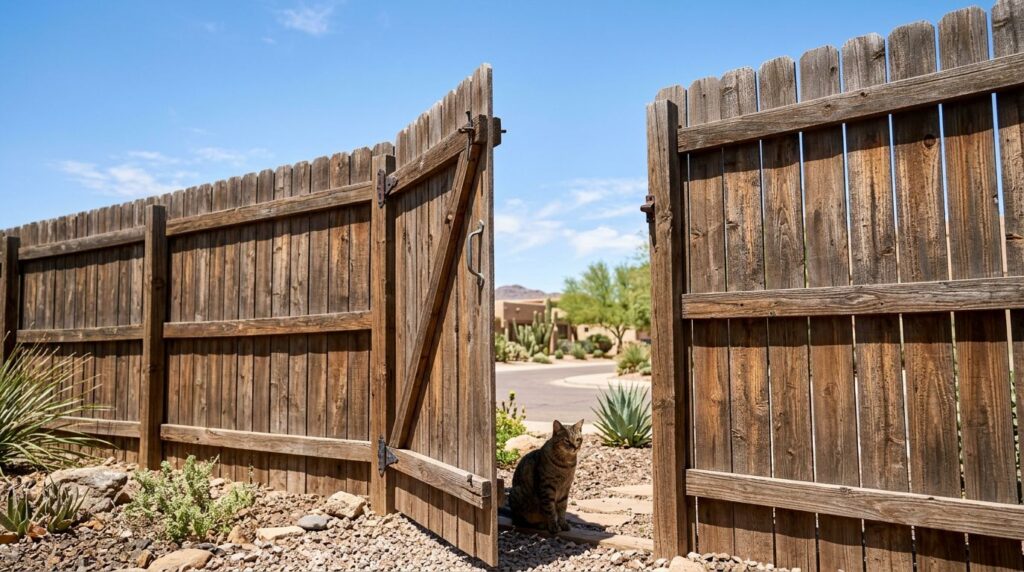
Pets in the East Valley lead highly active lives, running through spacious desert backyards and joining their families on outdoor adventures. Mesa residents take advantage of local parks and trails, enjoying quality time with their dogs and cats. However, this active lifestyle carries a permanent risk of accidental separation. An open side gate left unlatched by a utility worker, a sudden gap under a wooden backyard fence, or a frightening thunderclap during a summer monsoon storm can cause even the most well-behaved animal to bolt in a state of blind panic.
Table of Contents
- The Vulnerability of Fabric and Metal: Why External Identification Fails
- The Physics of Permanent Protection: How Radio Frequency Microchips Function
- The Registry Lifeline: Managing Your Contact Portal After Injection
- Comprehensive Care on Main Street: Integrating Safety into Annual Wellness Protocols
- The East Valley Security Standard: Trusting an Independent, Family-Focused Medical Team
- Regional Pet Protection: Pressing Questions for Mesa Owners
- Solidifying Safe Return Plans: Connect With Our Dedicated Team
When a pet becomes frightened, its natural fight-or-flight response takes over completely. Animals can travel remarkable distances when driven by fear, crossing busy roads and entering unfamiliar neighborhoods miles away from home. In these chaotic moments, traditional methods of tracking a pet often break down, making immediate recovery incredibly difficult for worried families. While a standard collar with attached identification tags provides a basic first line of defense, true peace of mind requires a permanent security measure. Owners need a system that remains completely unalterable and cannot be lost, removed, or rendered unreadable during an escape.
The emotional toll of a missing pet is a reality that many local families face every year. Animal shelters across the region receive lost dogs and cats daily, many of which possess no identifiable markings or owner information. Proactive preparation is the single most effective way to protect your animal before an emergency occurs. By implementing a permanent tracking solution alongside your pet’s regular care routine, you ensure that if your companion ever manages to escape, their pathway back to your home remains secure.
The Vulnerability of Fabric and Metal: Why External Identification Fails
Traditional collars and metal hanging tags have served as the standard form of pet identification for decades. They allow a neighbor who finds a roaming dog to quickly read a phone number and make a direct call, resolving the situation without involving local authorities. Despite this convenience, relying solely on external gear introduces major physical and logistical vulnerabilities that leave your pet unprotected when they need security the most.
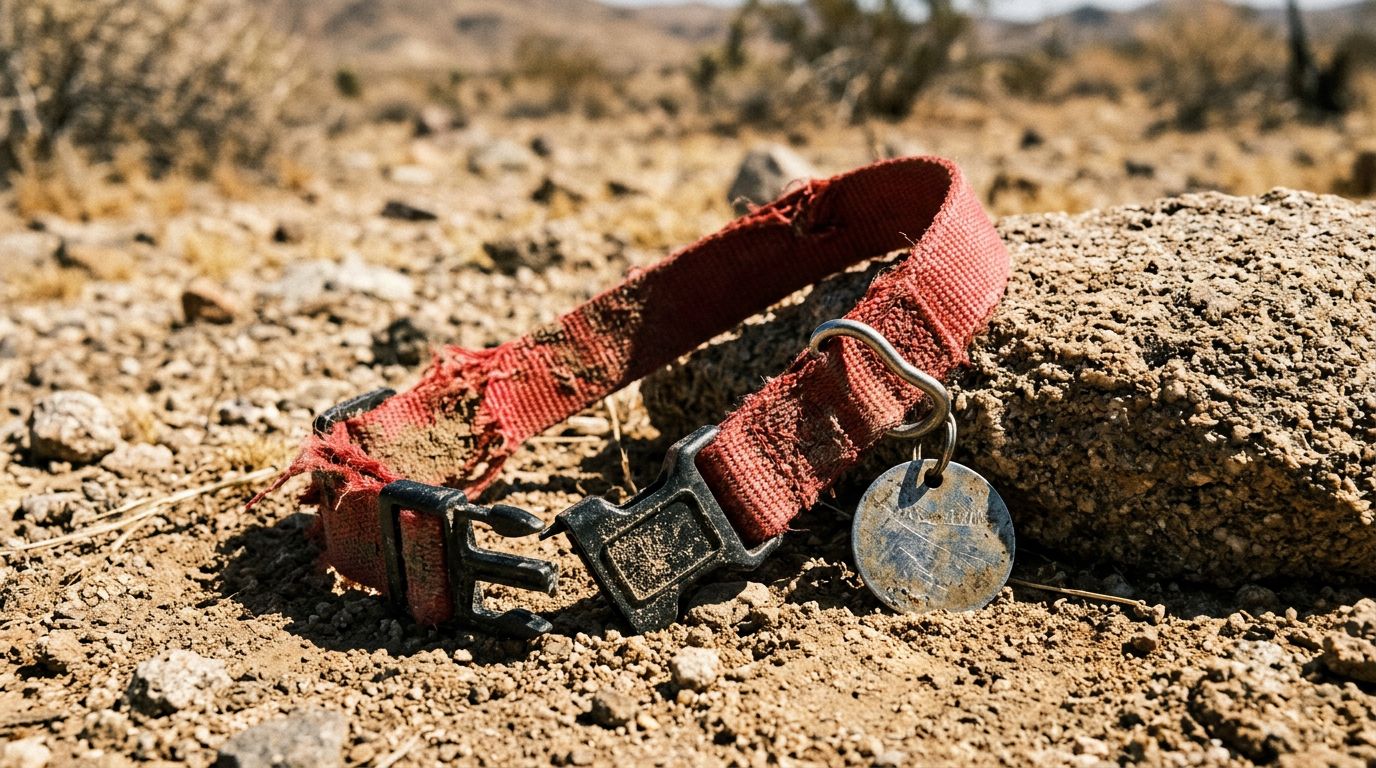
Physical collars are subject to constant wear and tear from an animal’s daily movements and environment. In the dry Arizona climate, nylon can degrade, leather can crack, and plastic buckles can become brittle over time. During an escape, a panicked dog may attempt to squeeze through a narrow opening in a chain-link fence or push through thick desert brush. This physical friction can easily snag the collar, causing the material to snap or forcing the buckle to release entirely to prevent strangulation.
- Collars frequently slip over an animal’s head when they back away from a leash in fear or panic.
- Metal tags scrape against water bowls and pavement, turning critical phone numbers into unreadable scratches.
- S-hooks and split rings stretch out during rough play, causing identification tags to fall off in the yard.
- Indoor cats often wear no collars at all, leaving them completely anonymous if they slip through an open front door.
When a collar falls off, your pet loses their identity completely in the eyes of anyone who finds them. Good Samaritans and animal control officers are left with no way to verify where the animal belongs or who to contact. While external tags remain a useful tool for casual neighborhood identification, they fail as a standalone recovery strategy. True security requires an internal, permanent identifier that stays with the animal regardless of the physical obstacles they encounter during an escape.
The Physics of Permanent Protection: How Radio Frequency Microchips Function
Understanding the safe, simple science behind microchip technology helps pet owners move past any anxiety regarding the installation procedure. A pet microchip is a tiny, biocompatible electronic transponder wrapped in a specialized cylinder of glass. The entire device is roughly the size of a single grain of rice, designed to rest safely within the subcutaneous tissue just beneath the animal’s skin.
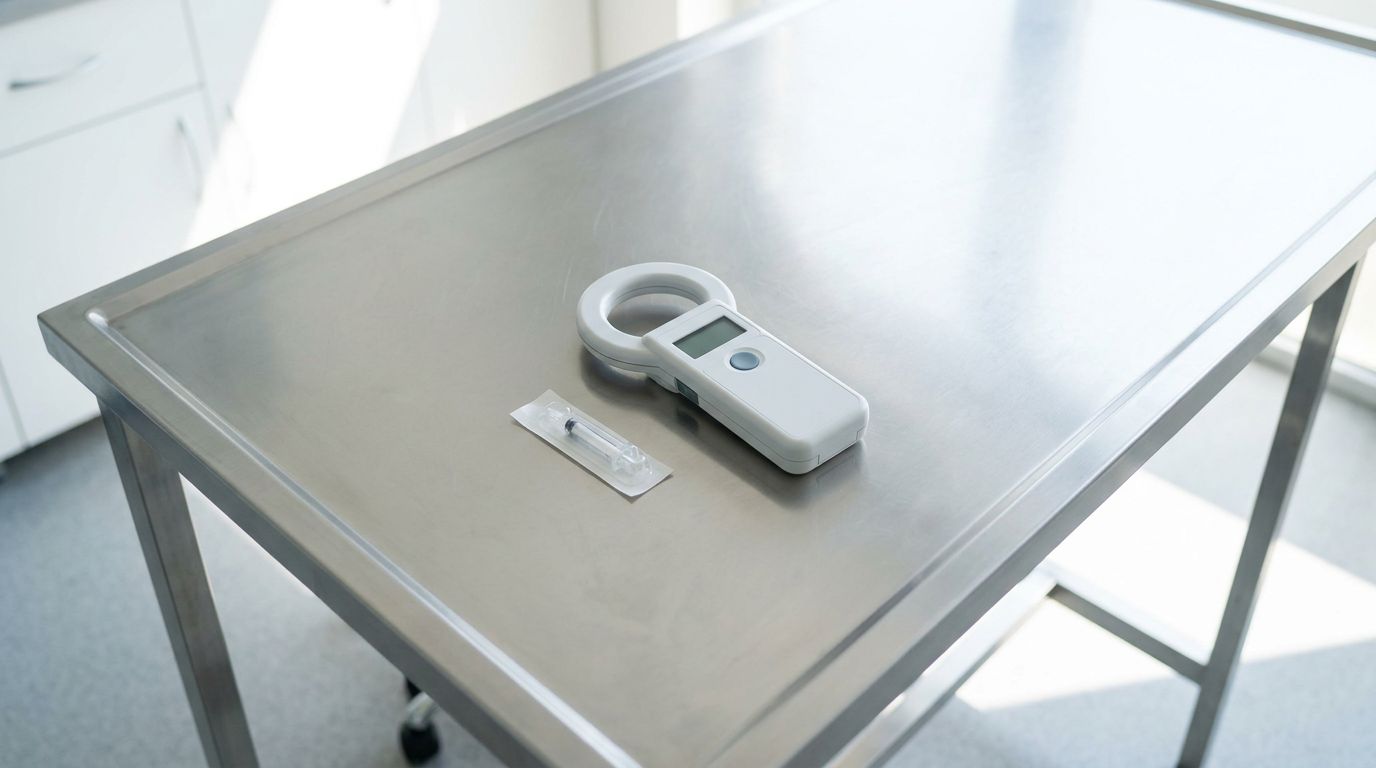
A common misconception among pet families is that a microchip functions as a real-time tracking device or a global positioning system. Microchips do not contain batteries, power sources, or moving parts, meaning they emit no active signals or harmful radiation. The device remains completely passive and dormant within your pet’s body, requiring no maintenance or internal power. The chip only activates when a handheld scanner passes directly over the animal’s shoulder blades, using safe radio frequency identification technology to transmit information.
The scanner emits a low-frequency radio wave that temporarily powers the tiny transponder inside the chip. Once activated, the microchip transmits a unique, fifteen-digit identification number back to the handheld reading screen. This number functions exactly like a secure digital serial number for your pet. The injection process is performed quickly using a pre-loaded hypodermic needle, placing the chip into the loose skin between the shoulder blades. The procedure takes only a few seconds and causes no more temporary discomfort than a regular veterinary visit, making it an easy addition to any routine.
The Registry Lifeline: Managing Your Contact Portal After Injection
Injecting the microchip is only the first step in creating a functional safety net for your dog or cat. A microchip is completely useless if the unique fifteen-digit number is not linked to an active, monitored owner account. The transponder itself does not store your home address, your name, or your personal phone number. It only contains the raw serial identification code, which acts as a key to unlock your contact information within a secure national database.
When an animal shelter or veterinary hospital scans a lost pet and retrieves the chip number, they immediately contact a national pet recovery registry. The staff enters the serial code into the secure database to locate the owner’s registered profile. If the owner has kept their information current, the registry provider facilitates a fast connection, allowing the family to coordinate a safe return. If the number is unregistered, the trail goes cold, and the microchip fails to perform its primary function.
- Complete the initial registration process immediately after your clinic appointment to activate the tracking loop.
- Update your online portal account right away whenever you change your primary cell phone number or email address.
- Log into the registry database to change your address records before moving to a new home or apartment.
- Provide secondary emergency contact numbers, such as a trusted neighbor or family member, within your profile.
A severe logistical breakdown occurs when families relocate or switch phone providers without updating their pet’s digital registry file. An animal can be successfully scanned at a shelter, but if the phone numbers on file are disconnected, the owners cannot be reached. Managing your online registry portal is an essential piece of responsible pet ownership. Keeping this digital file accurate ensures that your pet’s permanent identifier always points directly back to your family, regardless of how much time has passed since the initial injection.
Comprehensive Care on Main Street: Integrating Safety into Annual Wellness Protocols
Protecting your pet from accidental loss fits perfectly into a comprehensive preventative medicine routine. Adobe Veterinary Clinic provides complete care pathways where lifelong protection steps match seamlessly with regular wellness visits. By prioritizing routine examinations, pet families can address hidden health concerns and lock down permanent identification goals during a single, low-stress appointment.
Our medical staff integrates a quick microchip scan into every regular annual wellness exam. Over time, a microchip can occasionally migrate slightly beneath the skin due to an animal’s natural tissue movements. By running a universal scanner over your pet’s shoulders during their checkup, our team confirms that the transponder remains perfectly functional and reads clearly across all national frequencies. This regular check verifies that your permanent safety net stays active year after year.
Integrating the microchipping procedure into standard surgical or advanced care appointments is an excellent way to minimize stress for sensitive animals. When your pet comes into our Main Street facility for a routine spay or neuter surgery, a professional dental cleaning, or a specialized surgical procedure, we can easily administer the microchip while they are resting safely under anesthesia. This approach ensures your pet experiences no awareness of the injection, allowing you to upgrade their permanent security while our team manages their primary medical needs.
The East Valley Security Standard: Trusting an Independent, Family-Focused Medical Team
Choosing the right provider for your pet’s medical care means finding a team that prioritizes honest communication and stable community roots. Adobe Veterinary Clinic has operated as a reliable neighborhood fixture on Main Street, serving East Valley pet owners since 1975. Dr. Greg Heitman purchased the clinic in 1988, establishing a legacy of compassionate, family-centered service that has supported local generations of dogs and cats. Today, his sons, Dr. Phil Heitman and Dr. Andrew Heitman, work alongside Dr. Jeff Brown and Dr. Ryan Buzard to maintain this exceptional standard of care.
Our independent, family-owned practice answers directly to our clients and the animals we treat, rather than corporate shareholders or remote financial managers. This independent status allows our veterinary team to focus purely on the health and safety of your companion. We design custom treatment plans tailored to your pet’s specific lifestyle, avoiding the corporate profit quotas, unnecessary medical up-sells, or rigid subscription packages that often complicate care at corporate chain hospitals.
We believe that high-quality preventative medicine should stay accessible and straightforward for every family in Mesa. Our team treats every animal with the same level of care and respect we give our own pets, ensuring fair, transparent pricing for essential protection steps like microchipping. When you visit our facility on Main Street, you gain an experienced medical partner dedicated to keeping your four-legged family members safe, healthy, and connected to your home for life.
Regional Pet Protection: Pressing Questions for Mesa Owners
Solidifying Safe Return Plans: Connect With Our Dedicated Team
A traditional collar or metal identification tag can disappear in a single second, but a permanent microchip safeguards your pet’s identity for the rest of their life. Unexpected escapes happen to even the most careful and attentive pet families in Mesa, making proactive preparation an absolute necessity before an emergency occurs. By implementing a reliable tracking system within your pet’s regular preventative routine, you eliminate the terrifying anonymity that leaves lost animals stranded in regional shelters.
The dedicated medical team at Adobe Veterinary Clinic is ready to help you secure a permanent safety net for your companion. Our facility on Main Street possesses the universal scanning technology, high-grade microchips, and compassionate handling expertise needed to manage your pet’s safety goals smoothly. Reach out to our office right away to schedule an appointment or combine the procedure with your dog or cat’s next wellness checkup. Pick up your phone and call or text our team at 480-832-2240, or stop by our Main Street hospital to establish a lifelong protection plan that ensures your favorite four-legged family member can always find their way back home.