


Your Arizona Guide to Shots and Vaccinations
Welcoming a new puppy or kitten into your home is one of the most exciting experiences a pet owner can have. Whether you are playing fetch in a Mesa park or watching a kitten explore your living room, these early moments form the foundation of a lifelong bond. However, this period is also a time of significant vulnerability. Young animals do not start their lives with a fully developed immune system, which makes them susceptible to a variety of environmental threats.
Table of Contents
- Initiating a Lifetime of Biological Protection
- Bridging the Gap: The Science of Pediatric Immunity
- Foundational Immunization Protocols for Canine Companions
- Critical Defense Barriers for Growing Kittens
- Geographic Pathogens: The Arizona Environmental Risk Profile
- Beyond the Needle: The Value of a Comprehensive Physical Assessment
- The Adobe Veterinary Clinic Standard: Why Continuity Matters
- Strategic Logistics: Managing the Schedule and Costs of Early Care
- Resident Inquiries: Navigating Pet Health in Mesa, AZ
- Securing the Future: A Commitment to Preventative Excellence
Initiating a Lifetime of Biological Protection
At Adobe Veterinary Clinic, we view the first few months of a pet’s life as a critical window for health intervention. When a puppy or kitten is born, they receive temporary protection through their mother’s milk, known as colostrum. This provides them with maternal antibodies that shield them from disease during their first few weeks of life. As these antibodies naturally begin to fade, the pet’s own immune system must learn how to defend itself. This is where professional vaccinations come into play.
Proactive care is always more effective and far less stressful than treating a reactive emergency. Many of the most common childhood pet illnesses are entirely preventable through a well-timed series of shots. By establishing a medical home for your pet early on right here in Mesa, you are not just checking off a list of requirements. You are partnering with a medical team that understands the specific risks of our Arizona environment. We are here to ensure that your new companion grows into a strong, healthy adult.
Bridging the Gap: The Science of Pediatric Immunity
It is a common question among new pet owners: why does my pet need so many shots in such a short amount of time? It can seem repetitive to visit the clinic every three to four weeks during the first few months. However, there is a very specific biological reason for this schedule. The goal is to “bridge the gap” between the loss of maternal antibodies and the activation of the pet’s own immune response.
Maternal antibodies are a double-edged sword. While they protect the puppy or kitten, they can also interfere with the effectiveness of a vaccine. If we give a shot while the mother’s antibodies are still high, the vaccine might be neutralized before the pet’s immune system can “learn” from it. Since every pet’s maternal protection fades at a slightly different rate, we use a series of boosters to ensure there is never a dangerous lapse in protection.
This timeframe is often called the “vaccine window.” If a pet misses an appointment during this window, they may be left completely unprotected for several weeks. At Adobe Veterinary Clinic, we track these milestones carefully. We use multiple boosters to ensure that once the maternal shield is gone, the pet’s own system is fully engaged and ready to fight off pathogens. Missing even one scheduled appointment can restart the clock or leave your pet at risk for serious illness.
Foundational Immunization Protocols for Canine Companions
When we talk about puppy shots, we generally divide them into two categories: core and non-core vaccines. Core vaccines are considered essential for every dog, regardless of their lifestyle or location. These shots protect against diseases that are highly contagious, severe, or even fatal. In our practice, these core protections include:
- Rabies: This is a fatal viral disease that affects the central nervous system. It is also a zoonotic disease, meaning it can be passed from animals to humans. Because of the public health risk, this vaccine is required by law.
- DHPP: This is a single injection that covers four major issues: Distemper, Hepatitis, Parvovirus, and Parainfluenza.
- Distemper: A severe virus that attacks the respiratory, gastrointestinal, and nervous systems.
- Parvovirus: An incredibly hardy virus that causes life-threatening vomiting and diarrhea. It is especially prevalent in warm climates like Mesa.
Non-core vaccines, or lifestyle vaccines, are recommended based on what your dog actually does during the day. If your dog visits local grooming facilities, stays at boarding kennels, or plays at the many dog parks in the East Valley, they likely need protection against Bordetella (frequently called kennel cough) and Canine Influenza. These are highly contagious respiratory infections that spread quickly in social settings.
Another important lifestyle vaccine is for Leptospirosis. This is a bacterial infection often found in water or soil contaminated by wildlife urine. Even in our desert climate, localized flooding or standing water after a monsoon can create a risk. We discuss your dog’s daily routine to determine which of these protections are necessary to keep them safe in their specific environment.
Critical Defense Barriers for Growing Kittens
Cats have unique biological needs that differ significantly from dogs. Unfortunately, there is a lingering misconception that “indoor-only” cats do not need vaccinations. This could not be further from the clinical truth. Many feline viruses are incredibly resilient and can even be brought into the home on a human’s shoes or clothing. Furthermore, cats are masters of escape; if an indoor cat slips out the door, they could be exposed to a variety of dangers in seconds.
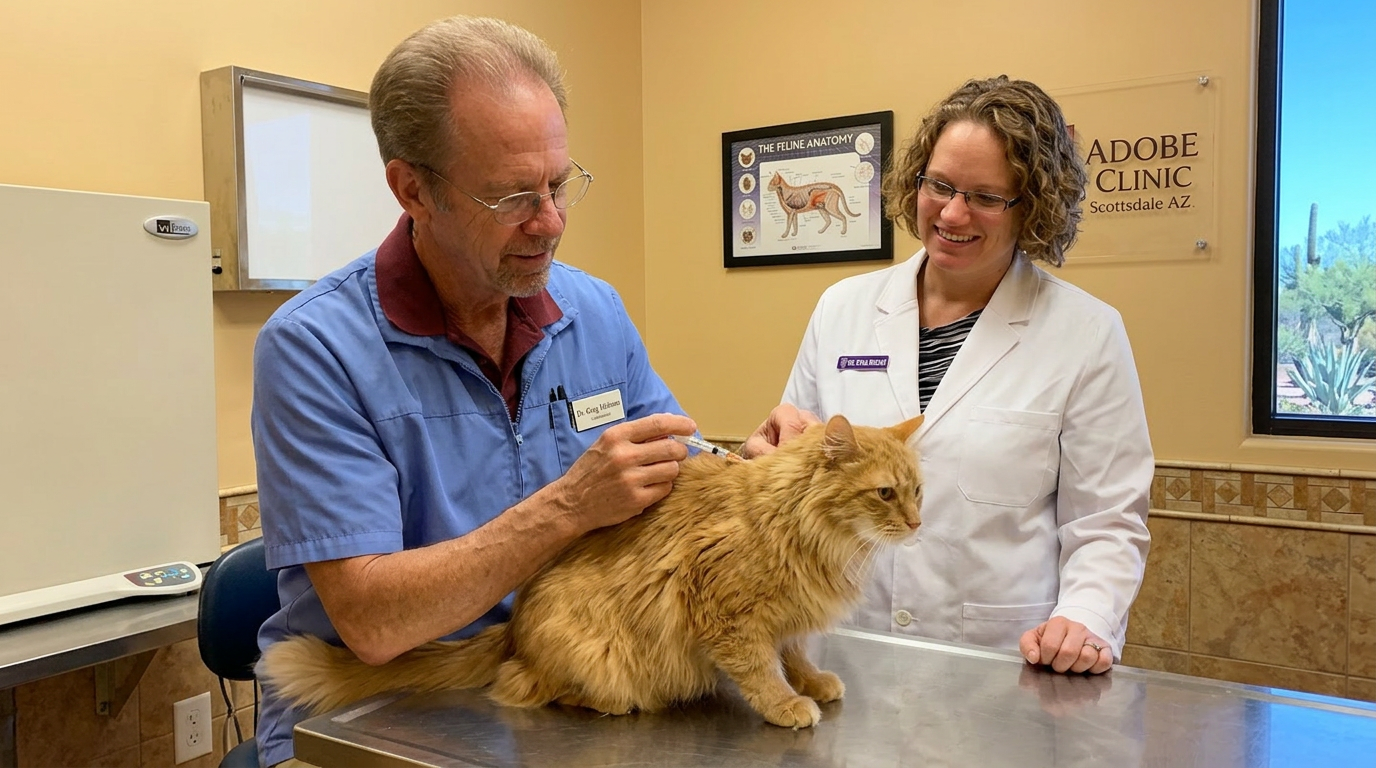
The primary core vaccine for kittens is the FVRCP. This acronym stands for Feline Viral Rhinotracheitis, Calicivirus, and Panleukopenia. Together, these components protect against severe upper respiratory infections and a highly contagious, life-threatening gastrointestinal virus. Feline respiratory diseases can become chronic if they are not prevented early, leading to a lifetime of congestion and eye issues.
We also strongly recommend the Feline Leukemia (FeLV) vaccine, especially for kittens. FeLV is one of the most common causes of illness and death in cats. It weakens the immune system and can lead to cancer. While it is most often spread through direct contact with infected cats (such as grooming or fighting), we prefer to vaccinate kittens to ensure they have a baseline of protection if their lifestyle ever changes.
Protecting your kitten involves:
- Starting the FVRCP series as early as six to eight weeks of age.
- Administering the Rabies vaccine as required by local regulations.
- Testing for FeLV and FIV (Feline Immunodeficiency Virus) before completing the vaccine series.
- Discussing the risk of outdoor exposure to determine if long-term FeLV boosters are needed.
Geographic Pathogens: The Arizona Environmental Risk Profile
Living in Mesa, Arizona, offers a beautiful landscape, but it also presents specific environmental challenges for our pets. Our heat and soil composition play a major role in the prevalence of certain diseases. For example, Canine Parvovirus is known for its ability to survive in desert soil for long periods, even in extreme temperatures. Because it does not die off easily, the risk of exposure in local neighborhoods remains high year-round.
One of the most unique threats to Arizona pets is the rattlesnake. For owners who enjoy hiking on trails like those at Usery Mountain or the Superstition Wilderness, the Rattlesnake Toxoid vaccine can be a vital part of a pet’s health plan. While it does not make a dog “immune” to the venom, it can lessen the severity of the reaction and provide valuable extra time to reach our clinic for emergency treatment.
Additionally, Arizona does not experience a “hard freeze” during the winter. In many other parts of the country, freezing temperatures kill off many pests and parasites. In the East Valley, fleas, ticks, and mosquitoes can remain active throughout the year. This makes year-round parasite prevention a non-negotiable part of your pet’s wellness plan. Mosquitoes carry heartworm, a devastating disease that is much easier to prevent than it is to treat. We emphasize that a “shot visit” is also the perfect time to ensure your pet is protected from these silent, local threats.
Beyond the Needle: The Value of a Comprehensive Physical Assessment
It might be tempting to look for the cheapest “shot clinic” available to get your pet’s vaccinations done. However, there is a significant difference between a quick injection and a professional wellness exam at Adobe Veterinary Clinic. When you bring your puppy or kitten to us, the vaccine is only one part of the visit. We perform a head-to-tail physical assessment that is designed to catch problems before they become crises.
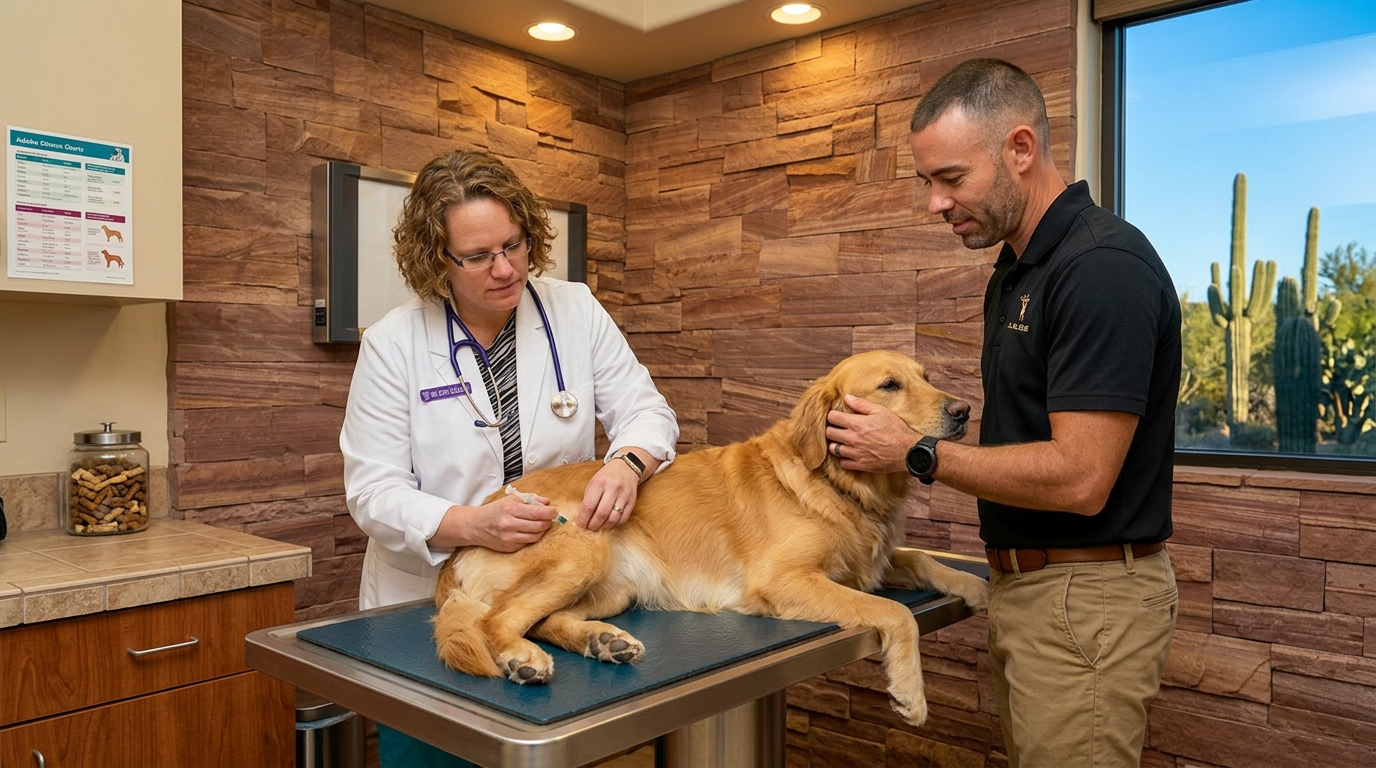
During these exams, our doctors look for a variety of issues that an untrained eye might miss. We check for congenital problems like heart murmurs or umbilical hernias. We examine the development of the jaw and teeth to ensure the adult teeth have room to grow in properly. We also assess the health of the ears, eyes, and skin. For a growing pet, these early checks are essential to ensure they are hitting their developmental milestones.
We also use this time to discuss nutrition, behavior, and basic training. A young pet’s health is about more than just avoiding viruses; it is about their overall well-being. By choosing a full-service clinic, you are ensuring that your pet is being evaluated as a whole animal. We believe that this comprehensive approach is the best way to catch potential issues early, which can save you money and save your pet from unnecessary discomfort later in life.
The Adobe Veterinary Clinic Standard: Why Continuity Matters
There is immense value in having a centralized medical record for your pet. When you visit us at our Main St. facility, we build a history that follows your pet through every stage of their life. This continuity of care means that if your pet ever gets sick or needs surgery, we already have a baseline of what is “normal” for them. We know their vaccine history, their previous weight fluctuations, and any sensitivities they might have.
As a full-service hospital, we offer much more than just pediatric care. As your pet grows, we provide advanced surgical capabilities, professional dental cleanings, and specialized senior pet care. Having all of these services under one roof ensures a seamless transition as your pet ages. You won’t have to worry about transferring records between different low-cost clinics that might not offer comprehensive follow-up care.
Our team at Adobe Veterinary Clinic is dedicated to building relationships with both the pets and the people of Mesa. We pride ourselves on being a trusted local resource. When you choose us, you are choosing a medical team that is invested in your pet’s long-term success. We are here for the routine vaccinations today, but we are also here for the dental cleanings in five years and the senior wellness exams a decade from now.
Strategic Logistics: Managing the Schedule and Costs of Early Care
We understand that the first year of pet ownership can be a significant financial and time commitment. Between the initial purchase or adoption fee, food, toys, and medical care, the costs can add up quickly. However, it is important to view this early care as an investment that prevents much larger expenses down the road. Treating a case of Parvovirus or a severe respiratory infection can cost thousands of dollars in emergency care, whereas a vaccine series is a fraction of that cost.
The typical schedule for a new puppy or kitten involves visits at approximately 8, 12, and 16 weeks of age. This allows us to properly space out the boosters and monitor your pet’s growth. We strive for transparent communication regarding these costs. Our team will walk you through exactly what your pet needs and why, helping you plan your budget accordingly.
By staying on top of this schedule, you are ensuring that your pet remains healthy and happy. We work with you to make the process as smooth as possible, providing reminders and flexible scheduling to fit into your busy life. Preventative care is the most cost-effective way to manage your pet’s health, and we are committed to making that care accessible and understandable for every Mesa family.
Resident Inquiries: Navigating Pet Health in Mesa, AZ
Securing the Future: A Commitment to Preventative Excellence
Providing your new puppy or kitten with the right vaccinations is one of the most important things you can do as a pet parent. While the list of shots and the schedule can seem overwhelming at first, it is a vital step in ensuring a long and vibrant life for your companion. These early medical interventions are more than just a task; they are a commitment to your pet’s future health and happiness.
At Adobe Veterinary Clinic, we are proud to be the premier partner for pet owners in Mesa. We offer the clinical expertise needed to protect against serious diseases and the compassionate care needed to make every visit a positive one. Our goal is to provide a complete blueprint for your pet’s wellness, from their very first puppy breath to their golden years.
We encourage you to reach out and schedule your first consultation with us. Let our team of dedicated professionals help you navigate the early stages of pet ownership with confidence. By starting off on the right paw with a comprehensive vaccination plan and regular wellness exams, you are giving your pet the best possible chance at a healthy life. We look forward to meeting the newest member of your family and helping them thrive in our beautiful Arizona community.