
Hearing that your beloved companion requires surgery is naturally stressful. Fear of the unknown often makes the days leading up to the procedure feel overwhelming. You want to ensure they receive the best possible care while minimizing any potential discomfort.
Here at Adobe Veterinary Clinic, we understand the anxiety that accompanies medical procedures. Our medical team believes that education is the ultimate antidote to fear. We want you to feel completely confident and informed about every step of the surgical journey.
This comprehensive guide breaks down the entire surgical process from start to finish. We are going to explore pre-surgical protocols, safety monitoring, and how to manage your pet’s recovery at home.
Pre-Anesthetic Protocols and Bloodwork
Safety starts long before your pet ever enters the surgical suite. A successful procedure relies heavily on thorough preparation and diagnostic testing. We begin every surgical appointment with a comprehensive physical examination of your animal.
Following the exam, we run a complete pre-anesthetic blood panel. This crucial step evaluates their liver and kidney function, ensuring these vital organs can process the sedatives safely. We also check their red blood cell count to confirm they are healthy enough for surgery.
Catching underlying health issues early allows our veterinarians to adjust the medication protocols accordingly.
The Realities of Dogs and Anesthesia
Many pet parents harbor deep concerns about putting their companions under sedation. The relationship between dogs and anesthesia has evolved incredibly over the last few decades. Modern veterinary medicine utilizes the exact same sophisticated medications found in leading human hospitals.
The American Animal Hospital Association sets incredibly strict safety guidelines for veterinary surgical practices. We adhere closely to these rigorous standards to ensure maximum safety for your furry family member.
Advanced pharmacology allows us to induce sleep gently and wake them up smoothly, drastically reducing stress on their cardiovascular system.
Dedicated Monitoring During the Procedure
While your companion is asleep, they are never left alone for a single moment. A highly trained veterinary technician is dedicated solely to monitoring their vital signs. This professional acts as your pet’s personal advocate throughout the entire surgery.
We utilize state-of-the-art equipment to track their heart rate, blood oxygen levels, and respiratory rate. We also monitor their core body temperature using specialized warming blankets to prevent dangerous drops in heat.
If any vital sign fluctuates even slightly, our team responds immediately to stabilize the patient.
Waking Up in the Recovery Ward
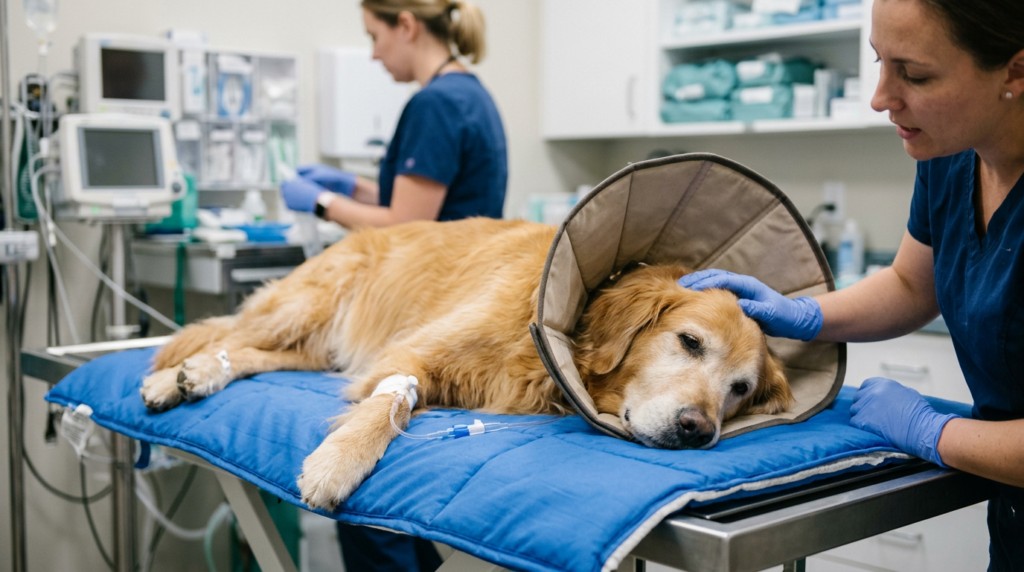
Once the surgical procedure is complete, your pet is moved to a quiet, heavily padded recovery area. We extubate them carefully and continue monitoring their vitals as they slowly regain consciousness.
Waking up is a gradual process that requires a serene and stress-free environment. We keep the lights dim and provide plenty of warm blankets to ensure their utmost comfort. A team member sits with them, offering gentle reassurance until they can lift their head and swallow normally.
Managing Dog Anesthesia After Effects
It is perfectly normal to feel a bit apprehensive about bringing your groggy companion home. Knowing how to handle dog anesthesia after effects is vital for a smooth and comfortable healing process. Most animals will feel noticeably disoriented for the first twelve to twenty-four hours after discharge.
You might observe some unusual behaviors once they settle into your living room. Whining, pacing, and mild shivering are incredibly common dog anesthesia after effects. The medications can temporarily confuse their internal thermostat and disrupt their normal sleep cycles.
The American Veterinary Medical Association notes that a mild cough is also completely expected if a breathing tube was utilized during the procedure.
Essential At-Home Recovery Steps
Creating a calm environment is the most important thing you can do for your recovering pet. You must restrict their physical activity to prevent painful injuries to their fresh surgical incisions.
Implement these simple steps to ensure a safe transition back into your household:
- Keep them confined to a quiet, dimly lit room away from loud noises.
- Provide a soft, low-profile bed on the floor to prevent accidental falls.
- Offer very small sips of water before introducing a fraction of their normal meal.
- Keep other energetic household pets separated to avoid accidental roughhousing.
When to Contact the Veterinary Clinic
While the vast majority of recoveries are entirely smooth, you should always monitor your companion for medical red flags. Refusing to drink water after a full twenty-four hours is a sign that they need veterinary evaluation.
You should also check their incision site twice daily for excessive redness, swelling, or unusual discharge. Pale gums, severely labored breathing, or continuous vomiting require immediate medical attention.
Do not hesitate to call our clinic if something feels wrong. We would rather assess a false alarm than miss a developing complication.
Breed Considerations for Dogs and Anesthesia
Certain canine breeds require highly specialized care and tailored protocols during surgical procedures. Brachycephalic breeds, such as Pugs and French Bulldogs, possess unique respiratory anatomy that requires extra airway support.
We customize our approach regarding dogs and anesthesia to fit your companion’s exact biological needs. Sight hounds, like Greyhounds, process sedatives differently due to their low body fat percentages.
Our experienced veterinarians account for all of these genetic variables when calculating medication dosages.
Partnering with Adobe Veterinary Clinic
Navigating the complex world of dogs and anesthesia does not have to be an isolating or terrifying experience. Our dedicated medical team is deeply committed to transparent communication and compassionate care.
We consider it an immense privilege to care for your beloved companion. If you are ever concerned about unusual dog anesthesia after effects, our knowledgeable staff is always just a phone call away.
Please reach out to Adobe Veterinary Clinic today if you have any lingering questions about your pet’s upcoming procedure.
Frequently Asked Questions
Is my senior pet too old to undergo surgery safely?
Age itself is not a disease. We base all of our surgical decisions on your pet’s overall systemic health rather than their birthdate. A healthy twelve-year-old dog is often a much better surgical candidate than a sick four-year-old dog. Comprehensive bloodwork helps us make these critical determinations.
Why do I need to withhold food before the procedure?
Fasting is a non-negotiable safety requirement. Sedation medications can often induce nausea. If an animal vomits while under sedation, they risk inhaling the food particles directly into their lungs, which causes life-threatening aspiration pneumonia.
Will my pet be in pain when they wake up from surgery?
We aggressively utilize proactive pain management protocols for every single patient. We administer potent analgesics before the surgery begins, during the procedure, and throughout their recovery. You will also be sent home with appropriate oral medications to keep them comfortable for several days.
How long will it take for the surgical grogginess to wear off?
The initial heavy sedation typically wears off within the first day. However, it can take up to forty-eight hours for the medications to completely leave their system. During this time, they should rest quietly, and their energy levels will gradually return to normal.